
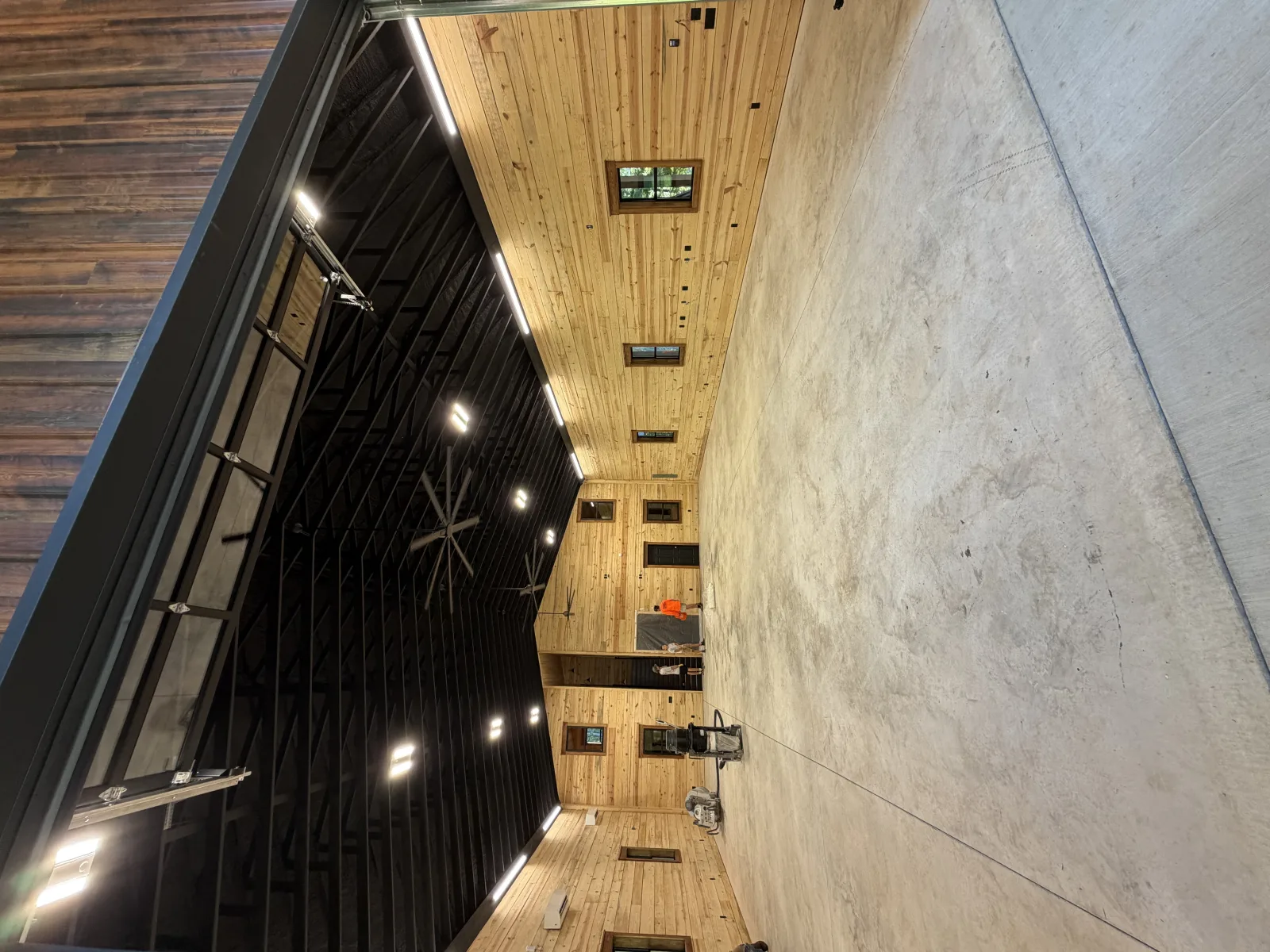
Garage floor restoration
Pitted, cracked and spalled slabs rebuilt back to a flat surface before anything decorative goes down.
The build-up, step by step
Every garage floor restoration job Shanks installs follows the same order, because skipping a stage is how floors fail. Taylor is on site for all of it.
Assess the damage
Spalling, freeze-thaw pitting and settlement cracks all get fixed differently. The first visit is about telling them apart.
Remove the failed coating
Old flaking paint or a failed kit is ground off completely. Coating over a failure guarantees a second failure.
Rebuild the surface
Polymer-modified patch for spalls, rigid filler for cracks, and a skim where the surface has lost its cream layer.
Coat
Once the slab is sound it takes flake, solid color or a grind and seal like any other floor.
Right room, right system
Older Anniston and Jacksonville garages where the slab is structurally fine but the surface has broken down, and any slab carrying a failed store-bought kit.
Where it is the wrong call
Slabs with active structural movement or heaving. That is a concrete problem, not a coating problem, and it gets fixed first.
Back in service: Repairs cure overnight; the finished system follows its own schedule.
Compare the other systems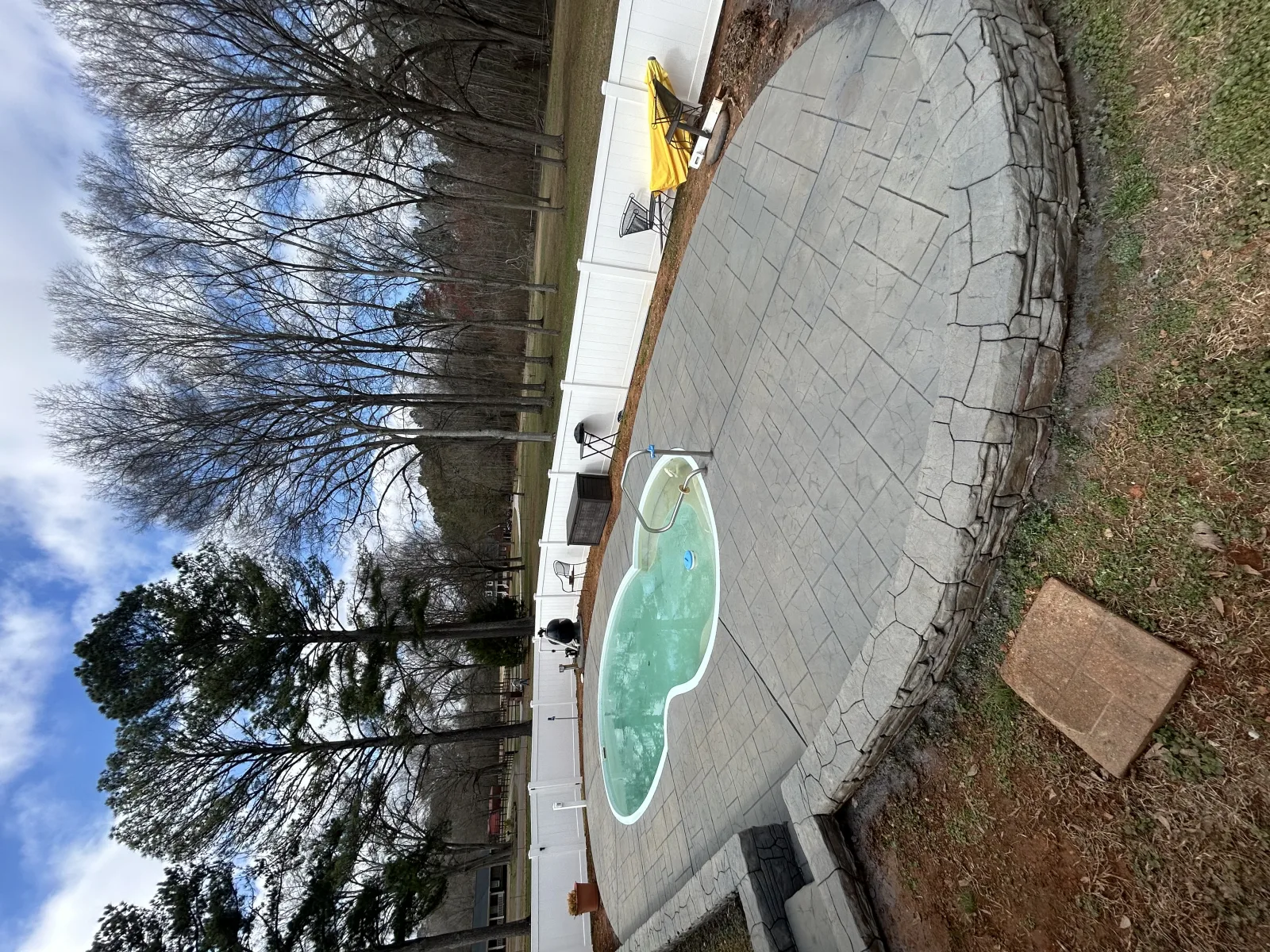
Why this floor costs what it costs
A quote on this work is really a quote on preparation. Here is what Taylor is looking at when he walks a floor:
Condition of the slab
A clean, sound slab grinds in a morning. One carrying old paint, carpet glue, or a failed coating can take a full day longer before anything can be applied.
How much repair it needs
Cracks, spalled edges, pitting and old anchor holes are filled and ground flush before coating. A slab that needs a lot of this can add a day on its own.
Size and shape
Bigger floors cost less per square foot, because the setup, the mixing and the cleanup are much the same whether the room is 400 or 1,400 square feet. Cut-up rooms with lots of edges take longer than open ones.
Which system you choose
Build thickness and the chemistry of the topcoat are the two biggest material costs. A heavier commercial build genuinely costs more than a residential one.
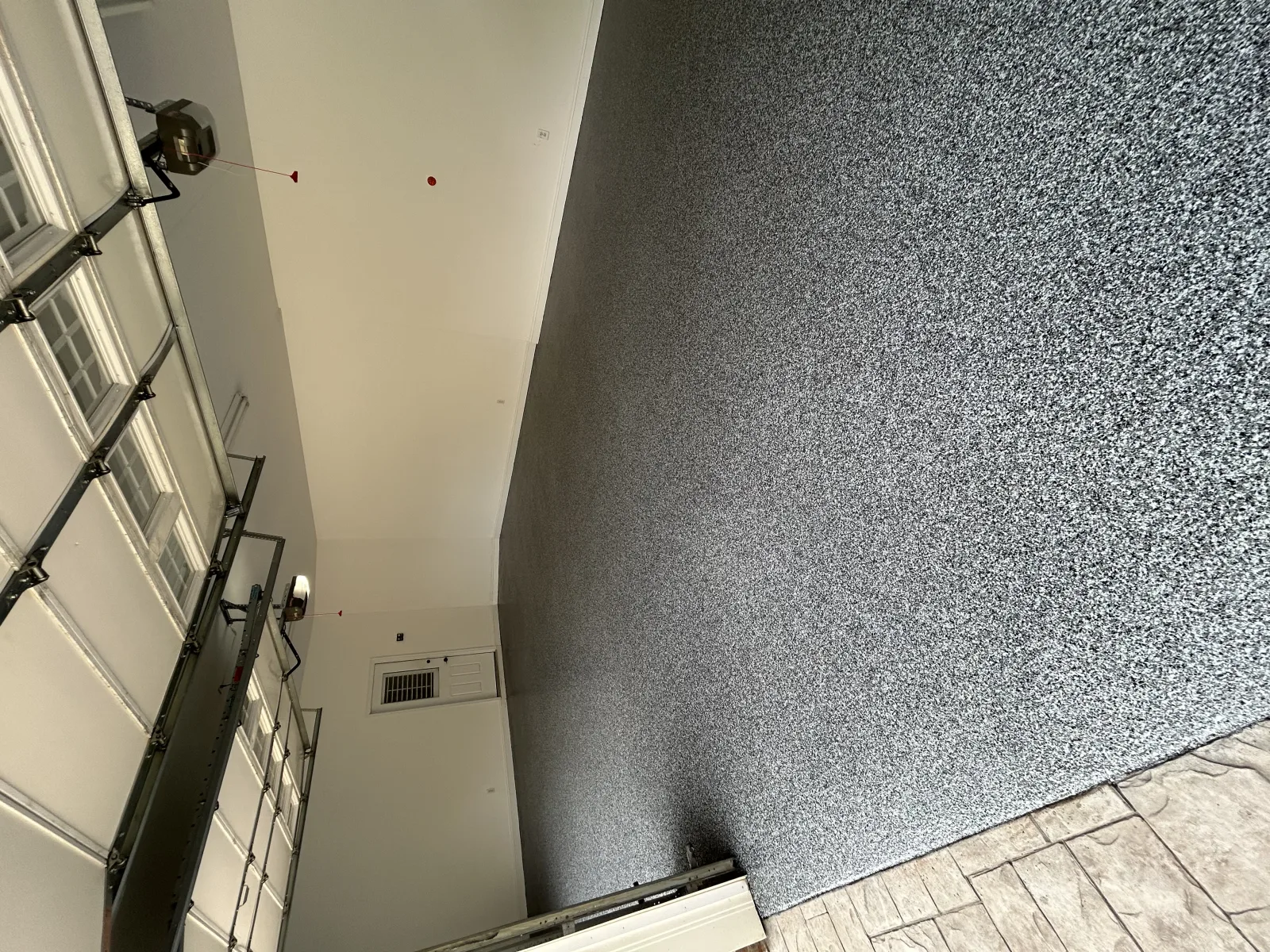
What Alabama slabs do
Newer construction around Trussville, Chelsea and Springville is usually a clean, flat pour that takes a coating beautifully, as long as the concrete has had its twenty-eight days. Coating green concrete is one of the few genuinely unfixable mistakes in this trade.
Out toward Gadsden, Southside and Pell City there are a lot of walk-out basements cut into a hillside. Those slabs sit against earth on three sides, so they get moisture-tested before a quote rather than after a failure.
Where the trailer goesWhat the days actually look like
Knowing the shape of the week takes most of the worry out of it. A typical job runs like this:
Before Taylor arrives
The room has to be completely empty, including anything mounted low on the walls if the coating is being coved up. Freezers and fridges need somewhere else to live for a few days, and the breaker for the room should be reachable.
Grinding day
The loudest day. Grinders run on HEPA vacuums so dust stays contained, but it is not quiet, and it is worth knowing that in advance if somebody works from home.
Coating days
Once resin is down, the room is closed. Pets and children need to stay out, and doors get taped so nobody wanders in overnight.
Getting it back
Foot traffic the next morning. Vehicles wait the full window, and putting a car back early is the one shortcut that visibly damages a new floor.
Keeping it looking new
Sweep it, and mop it with warm water and a neutral cleaner. Skip anything with citrus or ammonia, since both attack the topcoat over time. Felt pads under anything with a metal foot, and a mat under the jack stand if you work on vehicles. Years down the road the clear coat can be scuffed and recoated, which brings the gloss back without touching the flake underneath.
Anything Taylor installs comes with a walk-through at handover covering exactly this, plus what to avoid in the first two weeks while the coating reaches full hardness. If something does go wrong later, tell him about it rather than living with it.
The owner is the installer
Shanks Concrete Coatings is Taylor and Heather Shanks, working out of Anniston. Taylor trained directly with Brian Phillips, The Epoxy Dude, in southern Indiana, and he runs the grinder and pulls the squeegee on every job himself. Licensed and insured, Alabama #2602341.
If a garage floor restoration floor is not the right answer for your room, he will tell you that on the first visit rather than sell it to you. More about how Shanks works, or send over the details of your floor.
Garage Floor Restoration questions
My old epoxy is peeling. Can you go over it?
No. It gets ground off. A coating is only as good as what it is stuck to, and peeling epoxy is not stuck to anything.
Are the cracks gone for good?
Filled and ground flush, they disappear visually. A crack that is still moving seasonally can telegraph a hairline back through, and Taylor will tell you up front if yours looks like one of those.
Is it cheaper to replace the slab?
Almost never. Restoration is a fraction of demolition and a fresh pour, and you are not waiting a month for new concrete to cure.
How bad is too bad?
If the slab has lost more than about a quarter inch of surface across large areas, an overlay is the better route.
Can you fix just the bad section?
Sometimes, though a patch in the middle of an otherwise bare slab will always read as a patch. If the floor is being coated afterwards the repair disappears entirely, which is usually why people do both together.
Four questions worth asking any installer
Ask these of Shanks and of whoever else you are talking to. The answers separate a floor that lasts from one that looks good for a season, and a straight installer will not mind being asked.
How are you preparing the slab?
The only acceptable answers involve a diamond grinder or a shot blaster. Acid etching and a scrub with degreaser is not preparation, and it is the single most common reason a coating lets go.
Are you testing for moisture?
On any basement or ground-level slab this should be a yes with a number attached. Vapor pressure will push a coating off no matter how good the product is.
Who is actually on my floor?
Worth asking whoever quotes you. With Shanks the person who quotes it is the person who grinds it and coats it, and that is not true everywhere.
What is the topcoat?
A UV-stable polyaspartic or aliphatic urethane holds its color. A cheap job leaves a standard epoxy as the top layer, and it will amber in daylight within a year or two.
Other systems for the same room
Garage Floor Restoration is one of twenty-two systems Shanks installs. If the room is telling you something different, these are the closest alternatives, and Taylor will happily point you at the cheaper one if it is the right answer.
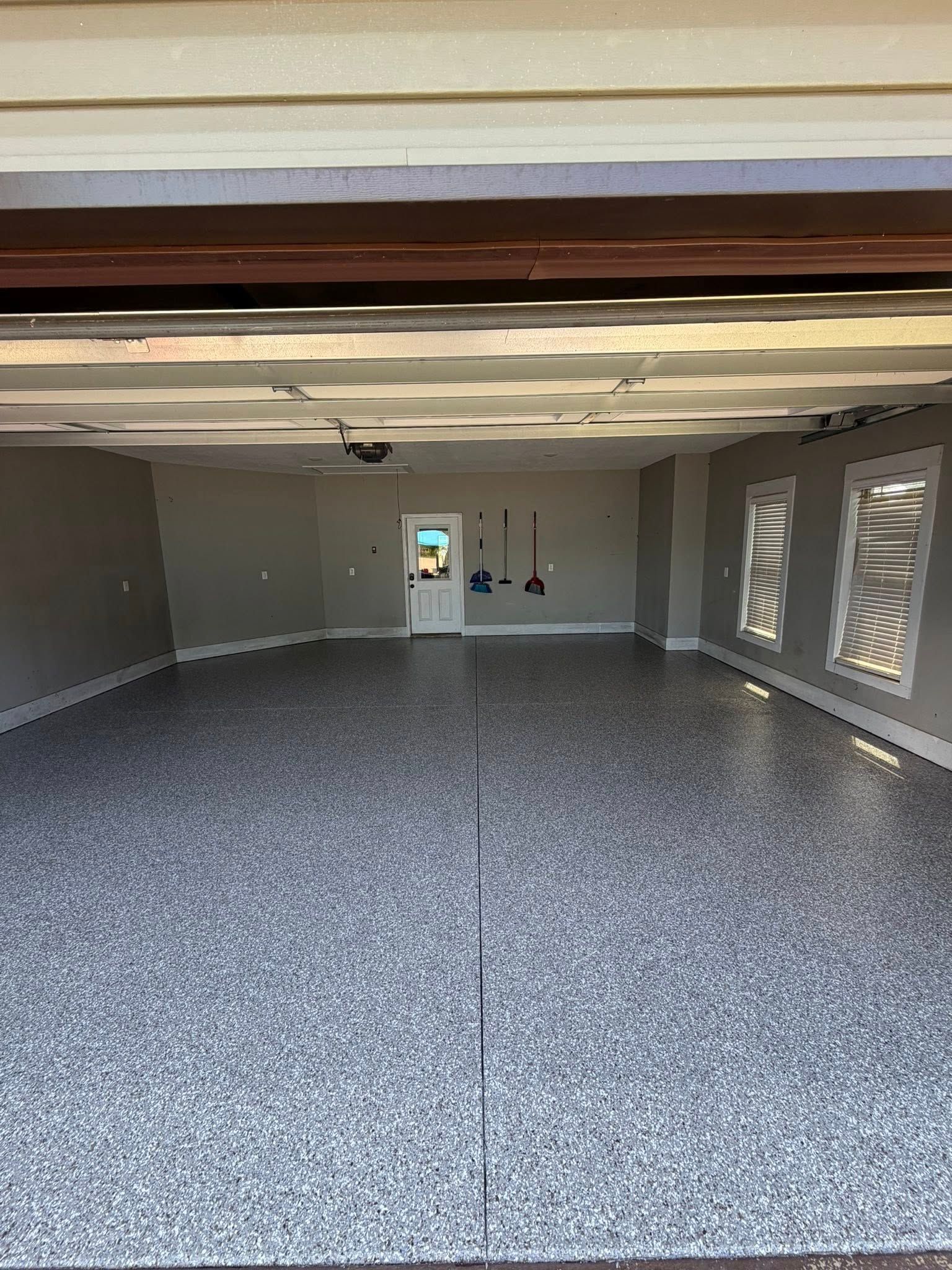
Flake Epoxy
Another system Shanks installs across the same sixty-mile area.
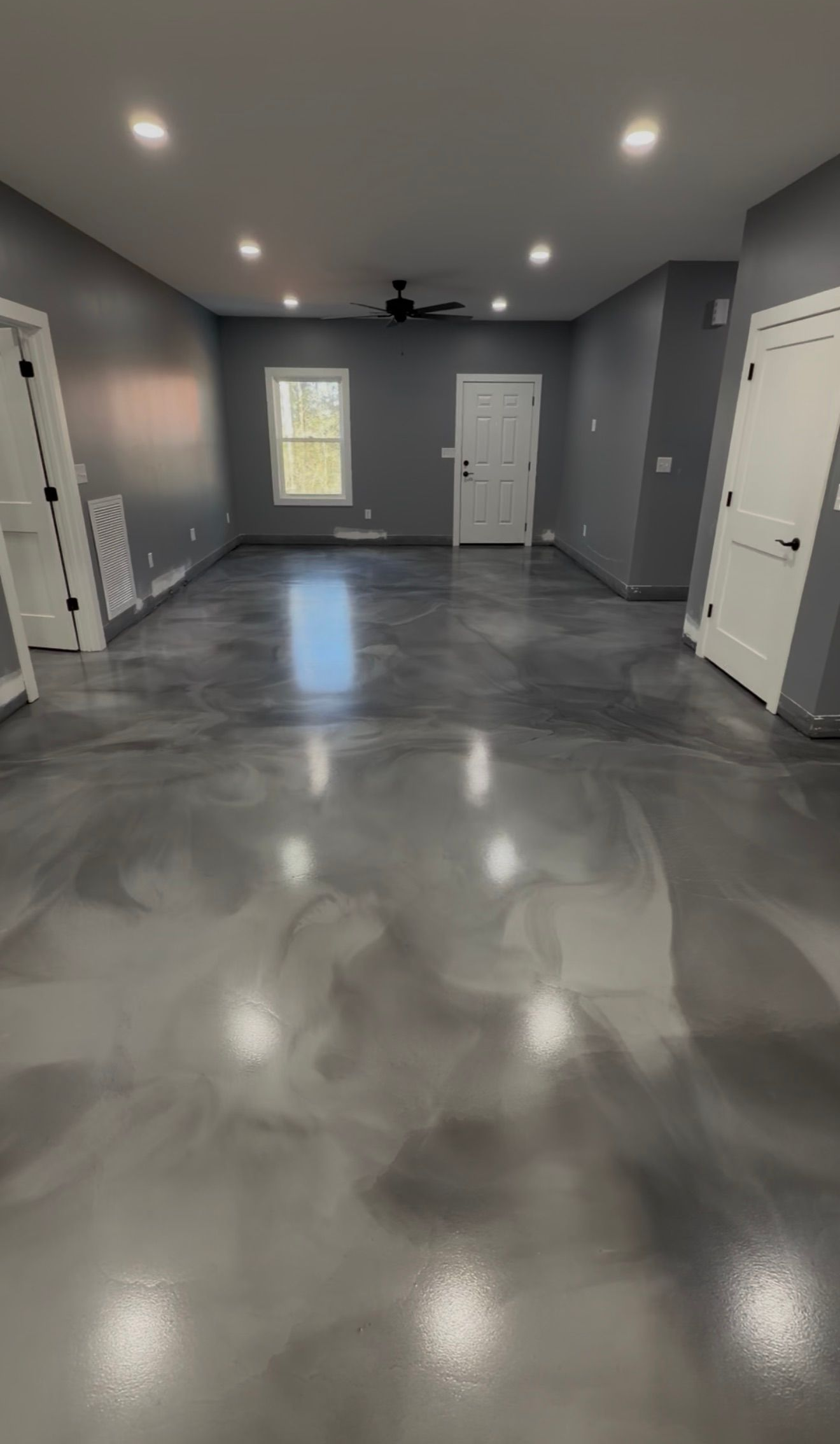
Metallic Epoxy
Another system Shanks installs across the same sixty-mile area.
Garage Floor Epoxy
Another system Shanks installs across the same sixty-mile area.
Grind and Seal
Another system Shanks installs across the same sixty-mile area.
Talk to the person doing the work
Square footage, what the room is used for, and what the slab looks like now. That is enough to get you a real number on garage floor restoration.