

A shop floor in Oneonta that takes rolling steel
When a shop at home is also where the business runs, the floor has to take rolling steel and the harsh cleaners that follow a spill. Taylor lays a pigmented body coat for color and finishes it with urethane, the layer that takes the wear.
Three coats, each with its own job
A solid color shop floor is a layered system, and every layer is there for a different reason. Once the bays are cleared, the floor goes down like this.
Grind, repair and prime
Urethane is a topcoat chemistry, and it will only ever be as good as the concrete under it. The slab is diamond ground until the troweled skin is gone, cracks and spalls are filled and ground flush, and a primer locks the profile. Shop slabs out here vary a lot from one building to the next, which is why Taylor treats the first visit as a real inspection.
A body coat that carries the color
The thickness comes from an epoxy or urethane body coat, pigmented to the color you chose. This is the layer that covers the repairs and gives the floor its even, solid look. Light gray and white suit a metal building well, because they bounce the overhead light back up toward the bench.
Urethane on top, last of all
The final coat is the urethane, picked for its flexibility, its color stability and how well it stands up to shop cleaners. Sheen is decided at this stage, full gloss or something flatter. Light traffic can come back after about a day, and full chemical resistance arrives at around seven.
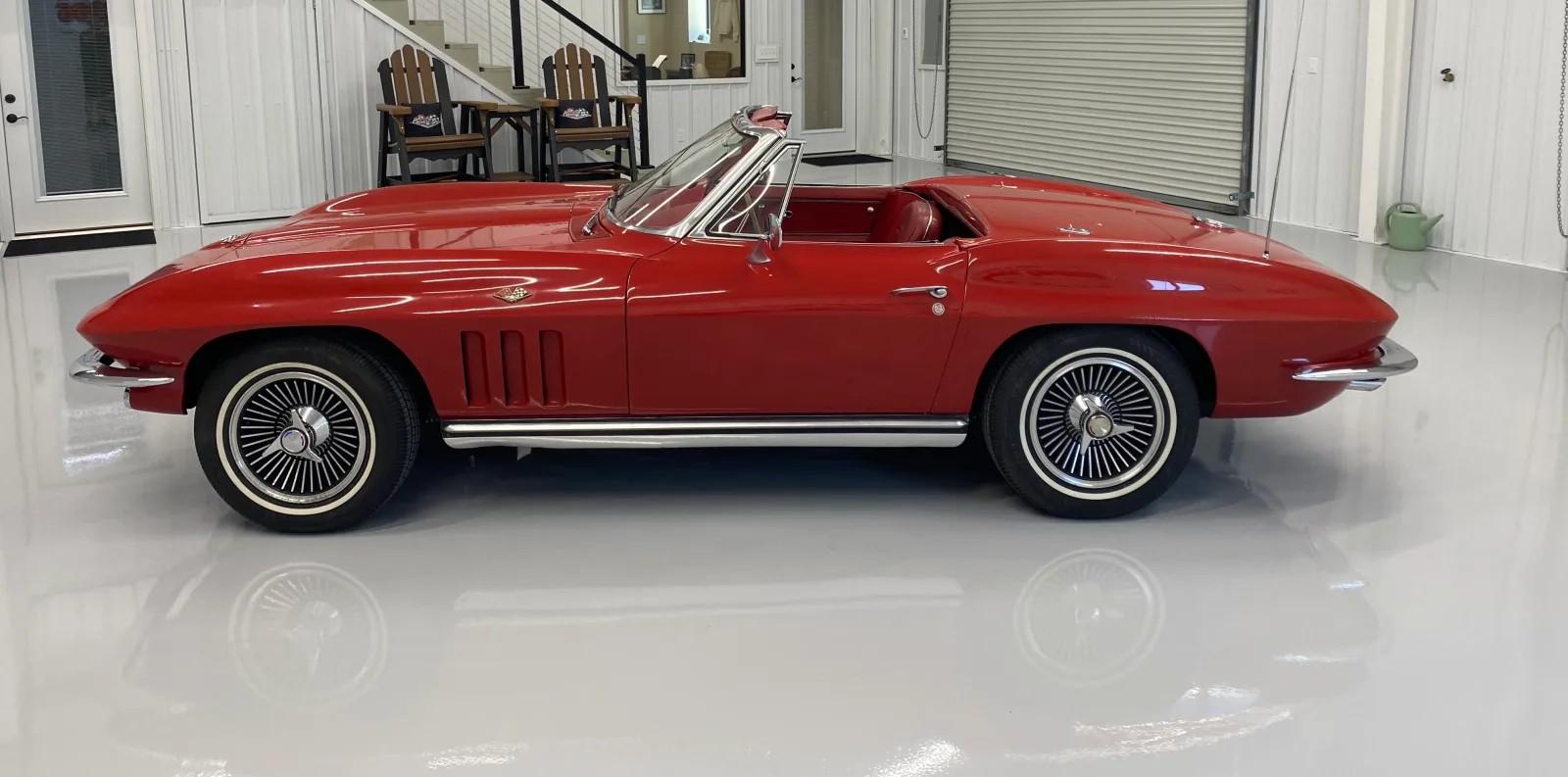
What a white floor does inside a metal building
In this frame a red classic convertible sits on a white high-gloss floor inside a metal building, and the car shows up a second time, upside down in the floor. That reflection is the urethane topcoat at work. In a shop with few windows, a light glossy surface catches whatever comes down from the ceiling fixtures and sends it back into the room, so the whole space reads brighter than the same building on bare concrete.
For someone running a business from a shop at home, that brightness is practical. A dropped socket or a fresh drip under a vehicle is easy to spot against a solid color, and the floor wipes down at the end of the day without dust coming back up out of the slab. The full build, from grinding through to the final coat, is set out on the polyurethane floors page, and finished shop floors are in the Shanks gallery.
Built for jack stands, lifts and tool chests
Most of what Taylor coats in town is garages and covered porches, with now and then a shop floor for somebody who works out of a building behind the house. Those shop floors take a different kind of beating. Steel casters under a loaded tool chest and a floor jack dragged over the same patch every morning both wear at one small area, day after day. Jack stands add point loads on top of that. Abrasion in a concentrated spot is where a urethane topcoat earns its place over a bare epoxy finish.
If a lift is going in, or is already bolted down, tell Taylor before the grind. The concrete under each post has to be sound, and the coating has to finish neatly around the base plates. Blount County has a lot of detached shops and pole barns, and slab quality swings widely between them. Sometimes the straight answer on that first visit is repair work before any color goes down, and you will hear it then.
A high-gloss solid floor can look wet even when it is dry, and in a shop where coolant gets spilled or rain blows in through a roll door it can turn slick. Grit mixed into the topcoat fixes that where the floor gets wet. It takes a little off the shine, so it is worth seeing a sample board before deciding. When you send over the details of the shop, mention which doors let water in and what usually ends up on the floor.
When Taylor steers you away from urethane
Taylor would rather sell you the smaller job than the wrong one, and a urethane floor is not right for every building. Two situations are worth knowing about before you settle on a system. If yours sounds like either, call (256) 365-6535 and talk it through first.
The slab needs rebuilding
Urethane is a thin finishing layer. It will not level a heaved slab or fill a badly broken one, and it cannot hold back water vapor rising from the ground. A shop poured without a vapor barrier gets moisture tested first, and a damaged slab is repaired or overlaid before any topcoat is discussed. Skipping that step is how floors peel.
It is mostly a place to park
If the building is really a garage with a truck in it every day, a flake floor usually serves better. The chip hides the dust and tire marks a solid color shows, and its texture adds grip. That system is covered on the Oneonta garage floor epoxy page, and you can ask Taylor to come and look at both options in one visit.
More floor work around Oneonta
Shop floors are one job among several. The others are below.
Garage Floor Epoxy
Attached garages that see a truck daily.
Flake Epoxy
Outbuildings, shop offices and basements.
Concrete Sealing
Grind and seal for shops and barns.
Patio Coatings
Covered porches, carports and patios.
Oneonta, AL
Every floor system, Oneonta wide.
Polyurethane Floors
The full build-up, step by step.
What Oneonta shop owners ask about urethane
How is urethane different from epoxy?
Epoxy bonds hard and builds thickness quickly, so it makes a good body coat. Urethane wears better and holds its color in sunlight, which makes it the better top layer. A solid color shop floor from Taylor normally uses both, with each one doing the part it handles best.
Will a white or light gray floor turn yellow?
Not with the right topcoat. Aliphatic urethanes and polyaspartics hold their color, while a standard epoxy left as the top layer ambers wherever sunlight reaches it, such as the strip inside an open roll door. That is the main reason epoxy goes underneath on these floors and urethane goes over it.
Can you put urethane over the epoxy floor I already have?
Often, yes. If the existing epoxy is still bonded and sound, it can be scuffed and topcoated, which is a common way to bring a tired floor back. If it is peeling or lifting anywhere, that coating comes off first, because a new topcoat cannot hold down an old one that has already let go.
Is a glossy solid floor slippery when it gets wet?
It can be, especially near the doors where rain or spilled fluid collects. Grit can be mixed into the urethane topcoat so your boots have something to grip. It takes a little off the shine, so Taylor shows you a sample first and you decide how much traction the room actually needs.
How long before I can work in the shop again?
Light traffic is fine after about 24 hours. The urethane reaches full chemical resistance at around seven days, so spills and harsh cleaners should wait until then. Taylor gives you the whole schedule for your building before the job starts, so you can plan the work you have booked around it.
Does a urethane topcoat smell bad while it goes on?
Less than most people expect. Modern urethane and polyaspartic topcoats are low odor compared with the older solvent-based products, and the building is ventilated while the floor cures. In a detached shop it is seldom an issue, though a shop attached to the house next to a bedroom is worth planning around.
A brighter floor for the shop
Tell Taylor how big the building is and what work goes on in it, and he usually returns calls the same day within working hours.