
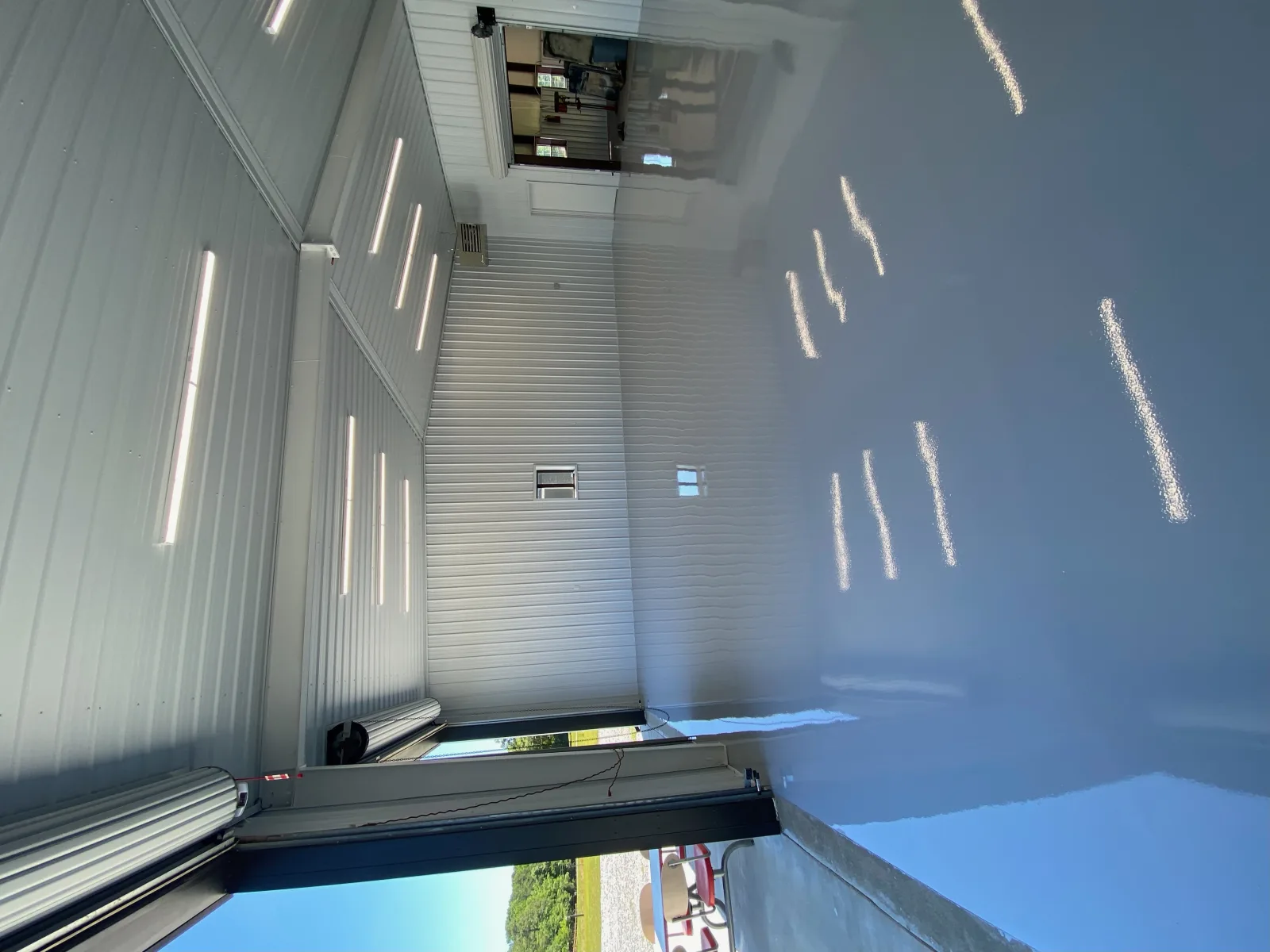
Chemical-resistant novolac epoxy
A denser epoxy chemistry for floors that see acids, solvents and aggressive cleaning.
The build-up, step by step
Every chemical-resistant novolac epoxy job Shanks installs follows the same order, because skipping a stage is how floors fail. Taylor is on site for all of it.
Confirm the exposure
The actual chemicals, concentrations, temperatures and dwell times. Novolac is specified against a list, not a feeling.
Prep aggressively
Usually shot blasting, because these systems are thick and want a deep profile.
Build
A novolac base with aggregate where the floor also needs grip, coved to the wall so spills cannot get behind it.
Novolac topcoat
The chemically resistant layer, thickness set by the exposure.
Right room, right system
Battery rooms, plating and processing areas, chemical storage, laboratories and secondary containment.
Where it is the wrong call
Ordinary garages and warehouses. It costs considerably more than a standard epoxy and there is no benefit without the exposure.
Back in service: Foot traffic in 24 hours, full chemical resistance around seven days.
Compare the other systems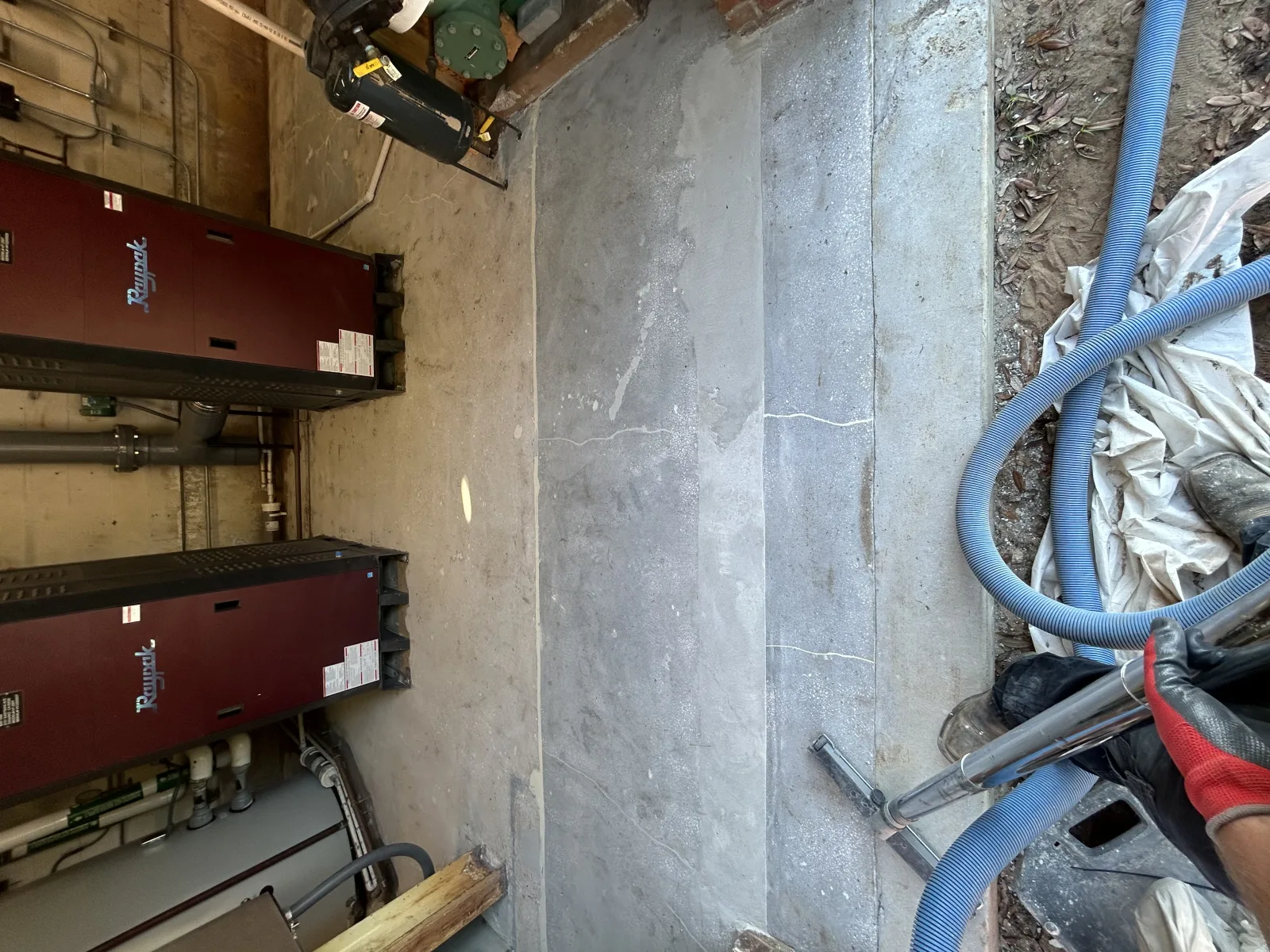
Why this floor costs what it costs
The square footage is the easy part. What changes a quote from one job to the next is almost always the condition of the slab underneath:
Condition of the slab
A clean, sound slab grinds in a morning. One carrying old paint, carpet glue, or a failed coating can take a full day longer before anything can be applied.
Size and shape
Bigger floors cost less per square foot, because the setup, the mixing and the cleanup are much the same whether the room is 400 or 1,400 square feet. Cut-up rooms with lots of edges take longer than open ones.
Access
A walk-out basement with a door at grade is straightforward. Carrying equipment down a flight of stairs, or working around a building that has to stay open, adds time.
Moisture in the slab
If testing shows vapor moving up through the concrete, a mitigating primer goes down first. It is an extra step, and skipping it is how coatings fail.
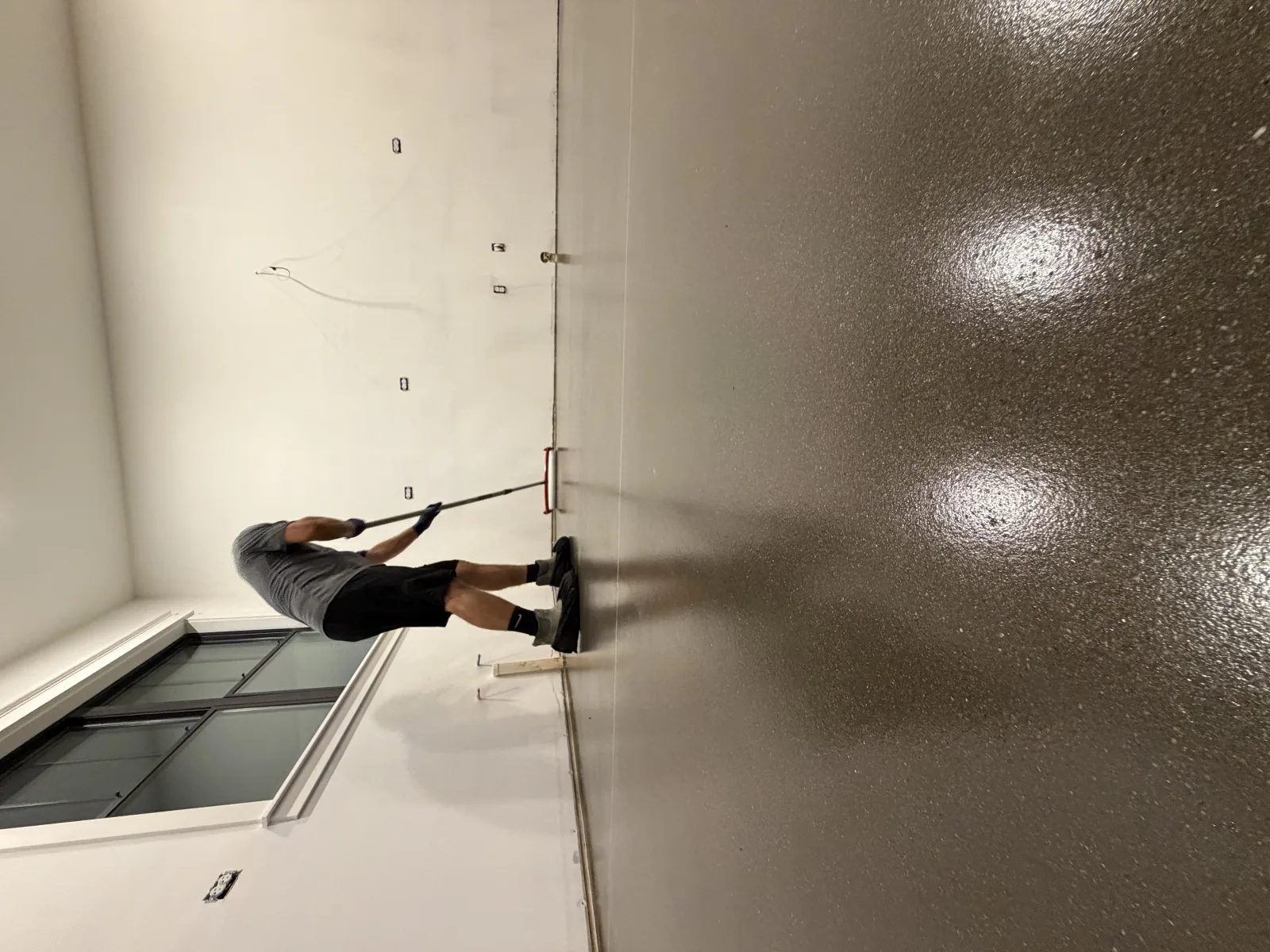
What Alabama slabs do
Freeze-thaw cycling here is mild compared with the north, but it is real, and it is what turns a hairline crack in a porch or a garage apron into a spalled edge over a few winters. Cracks get filled before they are coated, not after.
Most of the housing around Anniston, Oxford and Jacksonville was poured between the sixties and the eighties, and those slabs were hard-trowelled to a tight, closed surface. They look clean and they take a coating badly until they are properly ground, which is why a store-bought kit so often lets go here within a year.
Where the trailer goesWhat the days actually look like
People are usually more anxious about the disruption than the floor. Here is what the days actually look like:
Agreeing the spec
Profile, moisture limit and flatness get agreed in writing before anything starts, so there is no argument later about whether the slab was ready.
Containment
HEPA extraction on every machine, and sheeting where the work sits next to an occupied area.
Grinding to the profile
Grinding or blasting to the agreed profile, with joints and cracks handled to your detail.
Handover
Vacuumed, documented and ready to coat, with the moisture numbers written down for your manufacturer warranty.
Keeping it looking new
A stiff brush and a neutral cleaner, because a flat mop skates over the texture and leaves the low spots dirty. In a washdown room it is hosed and squeegeed to the drain. The texture is what makes it safe, so cleaning it properly matters more than on a smooth floor.
Anything Taylor installs comes with a walk-through at handover covering exactly this, plus what to avoid in the first two weeks while the coating reaches full hardness. If something does go wrong later, tell him about it rather than living with it.
The owner is the installer
Shanks Concrete Coatings is Taylor and Heather Shanks, working out of Anniston. Taylor trained directly with Brian Phillips, The Epoxy Dude, in southern Indiana, and he runs the grinder and pulls the squeegee on every job himself. Licensed and insured, Alabama #2602341.
If a chemical-resistant novolac epoxy floor is not the right answer for your room, he will tell you that on the first visit rather than sell it to you. More about how Shanks works, or send over the details of your floor.
Chemical-Resistant Novolac Epoxy questions
How is novolac different from standard epoxy?
A denser cross-link structure, which is what gives it resistance to acids and solvents that would soften a standard epoxy.
Do you need our chemical list?
Yes. Resistance is specified against specific chemicals at specific concentrations, and the data sheet decides whether it is suitable.
Does it need coving?
In any containment or washdown area, yes. A flat termination at the wall is where these floors fail first.
Is it worth it for a home garage?
No. For road salt and dropped oil a standard flake system is the right answer.
How thick does the build need to be?
It depends entirely on the exposure. Light splash and spill areas are specified thinner than immersion or containment, and the chemical list plus dwell time is what sets the number.
Four questions worth asking any installer
Ask these of Shanks and of whoever else you are talking to. The answers separate a floor that lasts from one that looks good for a season, and a straight installer will not mind being asked.
How are you preparing the slab?
The only acceptable answers involve a diamond grinder or a shot blaster. Acid etching and a scrub with degreaser is not preparation, and it is the single most common reason a coating lets go.
Are you testing for moisture?
On any basement or ground-level slab this should be a yes with a number attached. Vapor pressure will push a coating off no matter how good the product is.
Who is actually on my floor?
Worth asking whoever quotes you. With Shanks the person who quotes it is the person who grinds it and coats it, and that is not true everywhere.
What is the topcoat?
A UV-stable polyaspartic or aliphatic urethane holds its color. A cheap job leaves a standard epoxy as the top layer, and it will amber in daylight within a year or two.
Other systems for the same room
Chemical-Resistant Novolac Epoxy is one of twenty-two systems Shanks installs. If the room is telling you something different, these are the closest alternatives, and Taylor will happily point you at the cheaper one if it is the right answer.

Concrete Grinding
Another system Shanks installs across the same sixty-mile area.
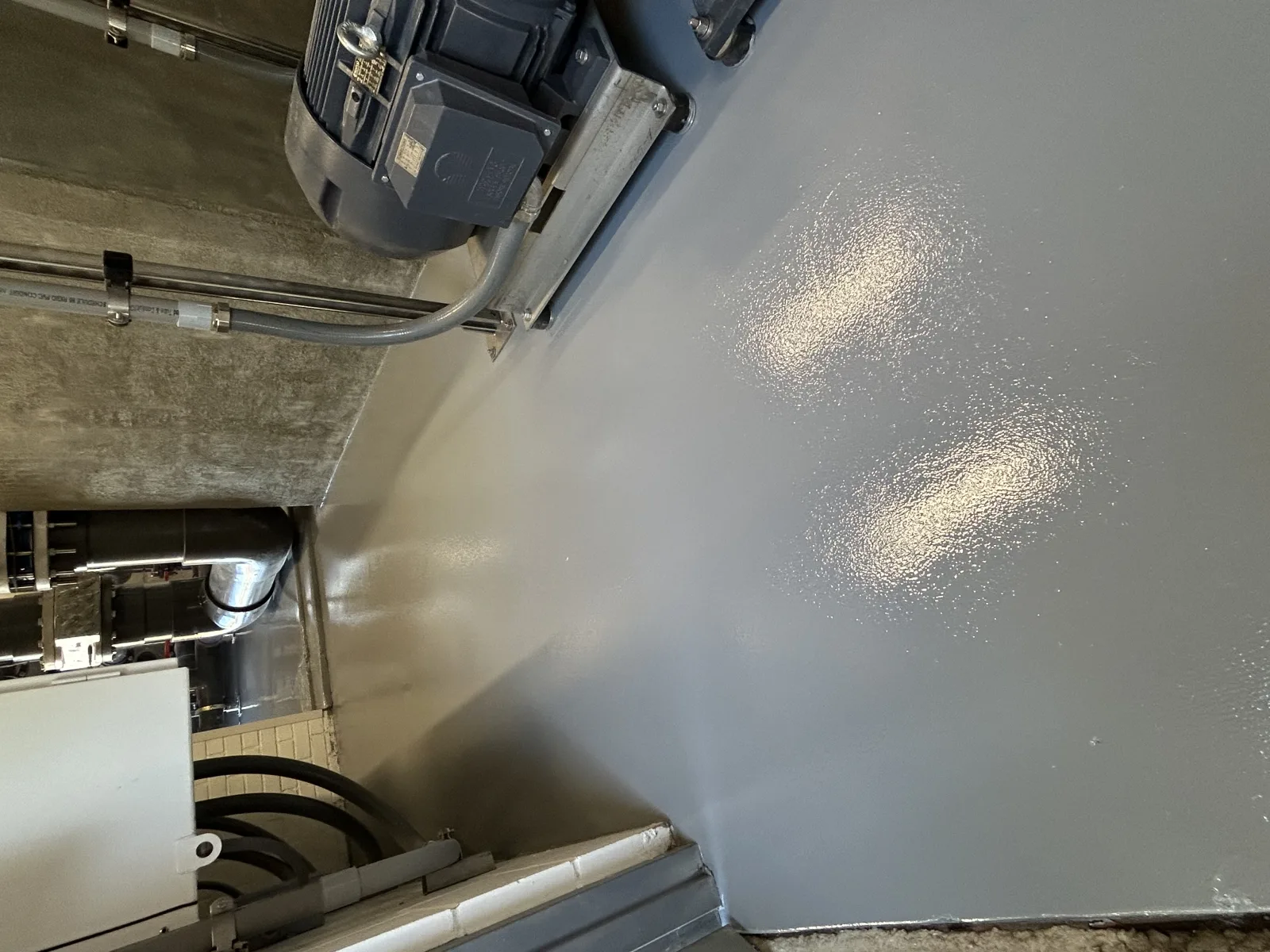
Concrete Sealing
Another system Shanks installs across the same sixty-mile area.
Floor Prep
Another system Shanks installs across the same sixty-mile area.
Overlays
Another system Shanks installs across the same sixty-mile area.
Talk to the person doing the work
Square footage, what the room is used for, and what the slab looks like now. That is enough to get you a real number on chemical-resistant novolac epoxy.