
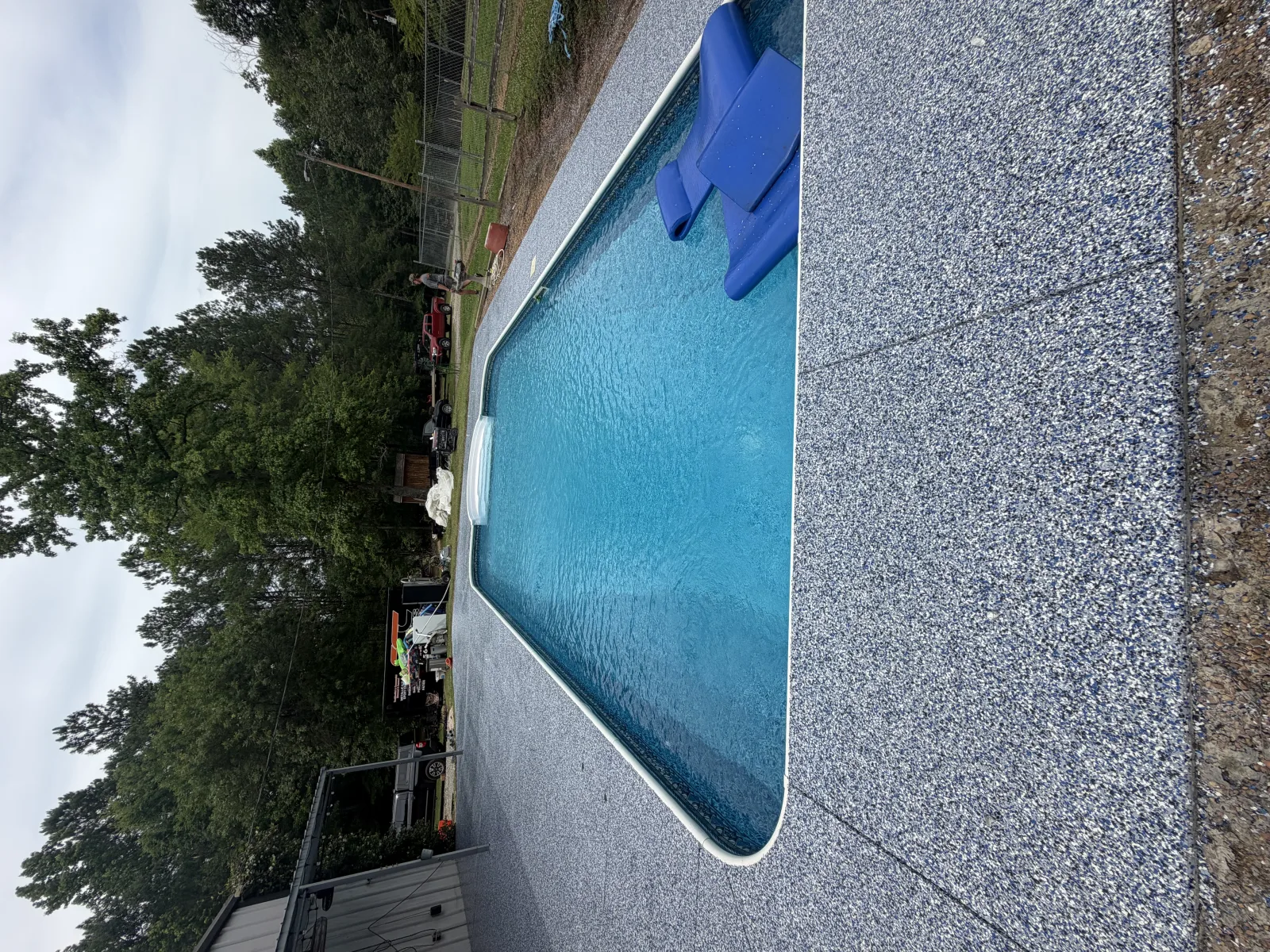
Twenty-two ways to finish a concrete floor
Everything Shanks Concrete Coatings installs, grouped by the kind of room it belongs in. Every one of them sits on the same preparation: grind it open, repair what is broken, then coat.
Residential
Garages, basements, laundry rooms and the floors people actually live on.
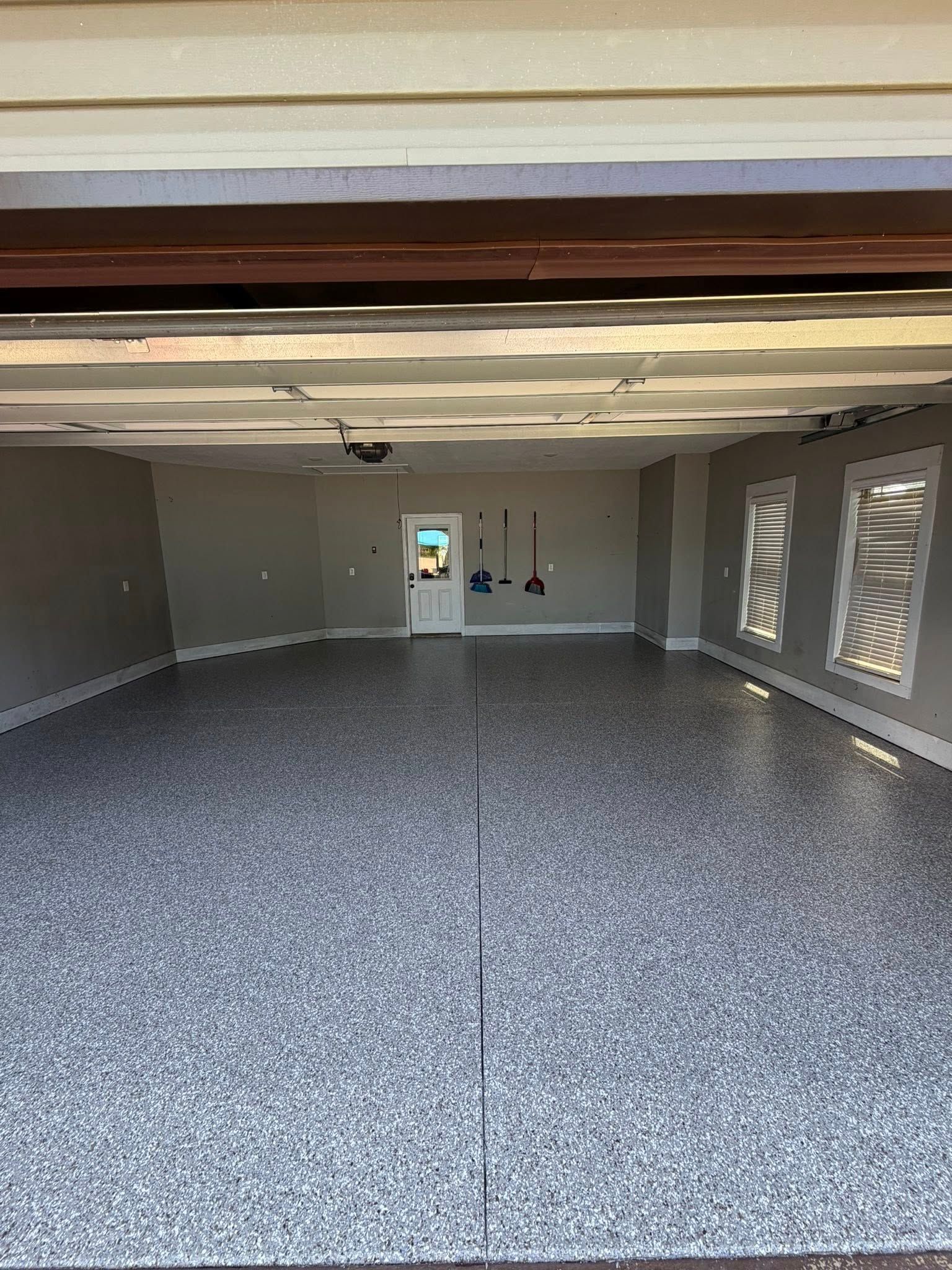
Garage Floor Epoxy
A ground, patched and coated garage slab that shrugs off hot tires, dropped tools and road salt.

Flake Epoxy
Vinyl chip broadcast into a pigmented base and locked under clear. The most requested floor Shanks installs.
Metallic Epoxy Garage Floors
Pearl pigments moved through clear resin so the floor reads like poured stone. No two are the same.
Garage Floor Restoration
Pitted, cracked and spalled slabs rebuilt back to a flat surface before anything decorative goes down.
Non-Slip Epoxy Floor
Traction engineered into the topcoat for pool bathrooms, ramps, wash bays and entryways.
Residential Concrete Floor Polishing
The slab you already own, refined through progressive diamonds until it shines on its own.
Polyurethane Floors
A flexible, abrasion-resistant topcoat where the floor moves, gets scrubbed, or sits in sunlight.
Quartz System
Colored quartz broadcast into resin for a floor that takes weight, water and cleaning chemicals.
Self-Leveling Overlays
A new, flat cementitious surface poured over a slab that has lost its own.
Sleeper System Floor
Coating and sealing the concrete beneath a raised sleeper subfloor before the finish floor goes down.
Outdoor
Porches, patios, pool decks and elevated terraces, built for Alabama sun and rain.
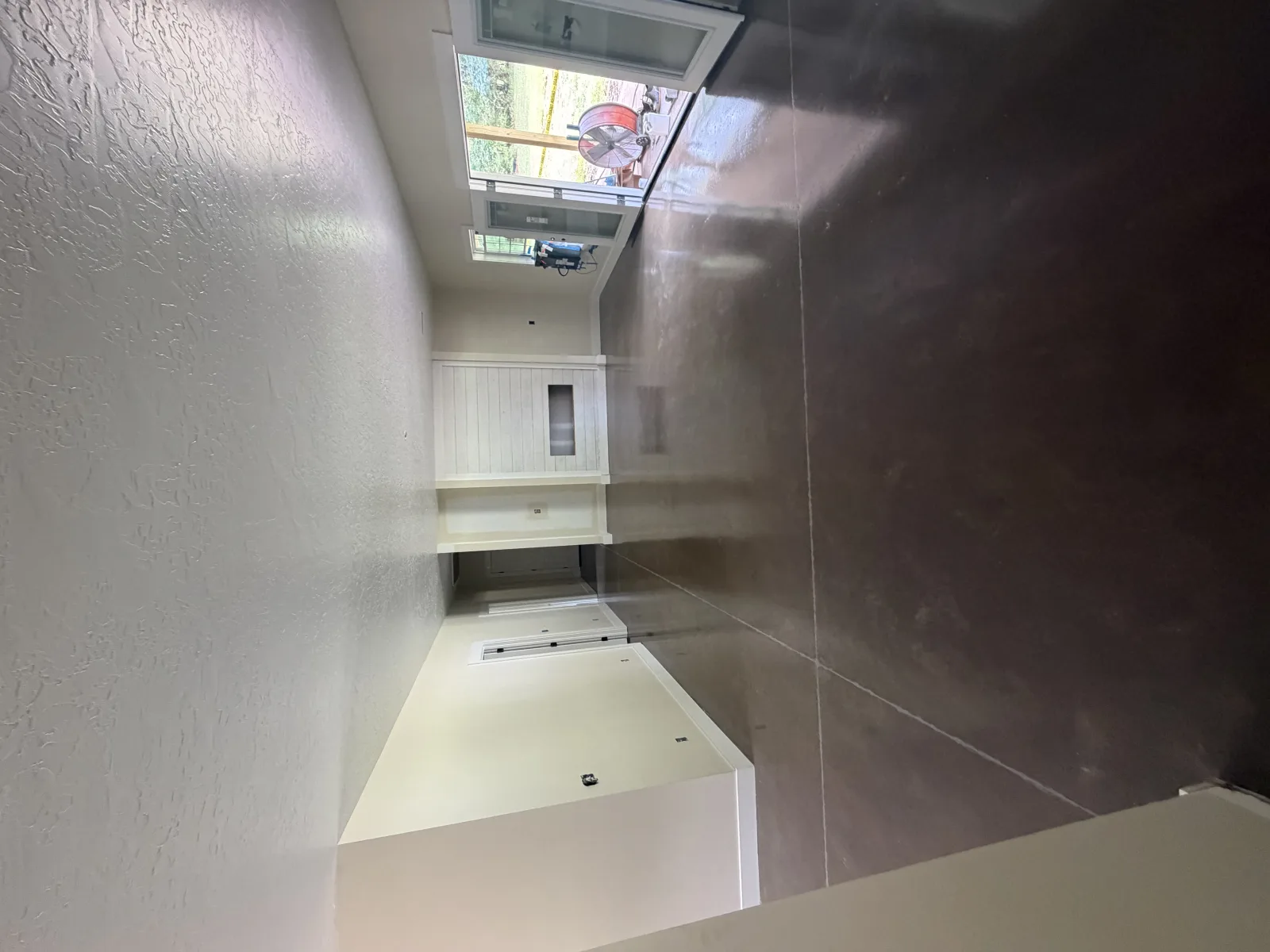
Patio Coatings
Textured, UV-stable coatings for the concrete you actually sit on in an Alabama summer.
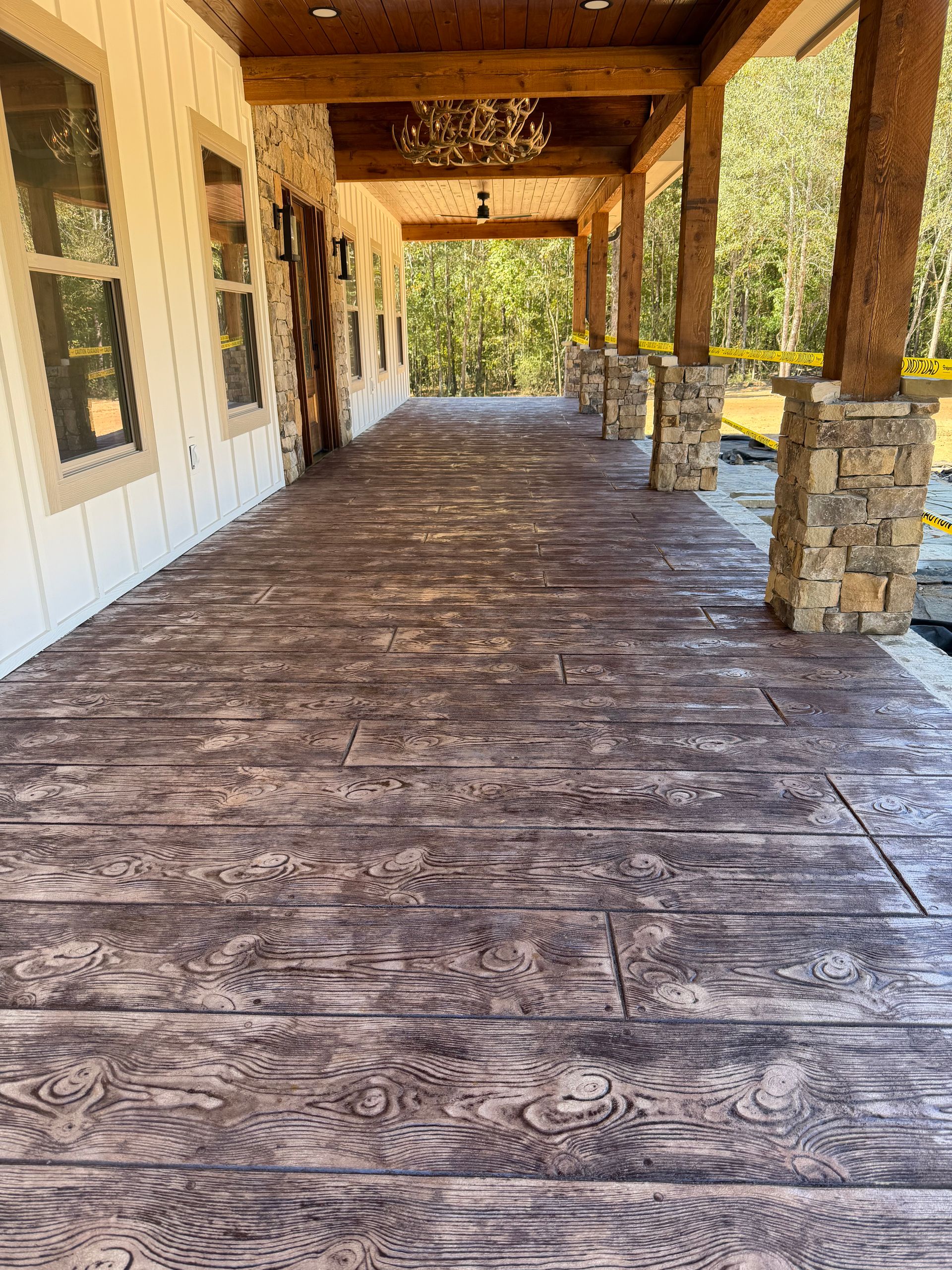
Terrace Restoration
Waterproof, walkable systems for elevated concrete where a leak becomes someone else’s ceiling.
Waterproofing
Keeping water out of concrete, and stopping vapor moving up through a slab into your finish floor.
Commercial
Shops, warehouses, showrooms and back-of-house floors, specified for the real use.
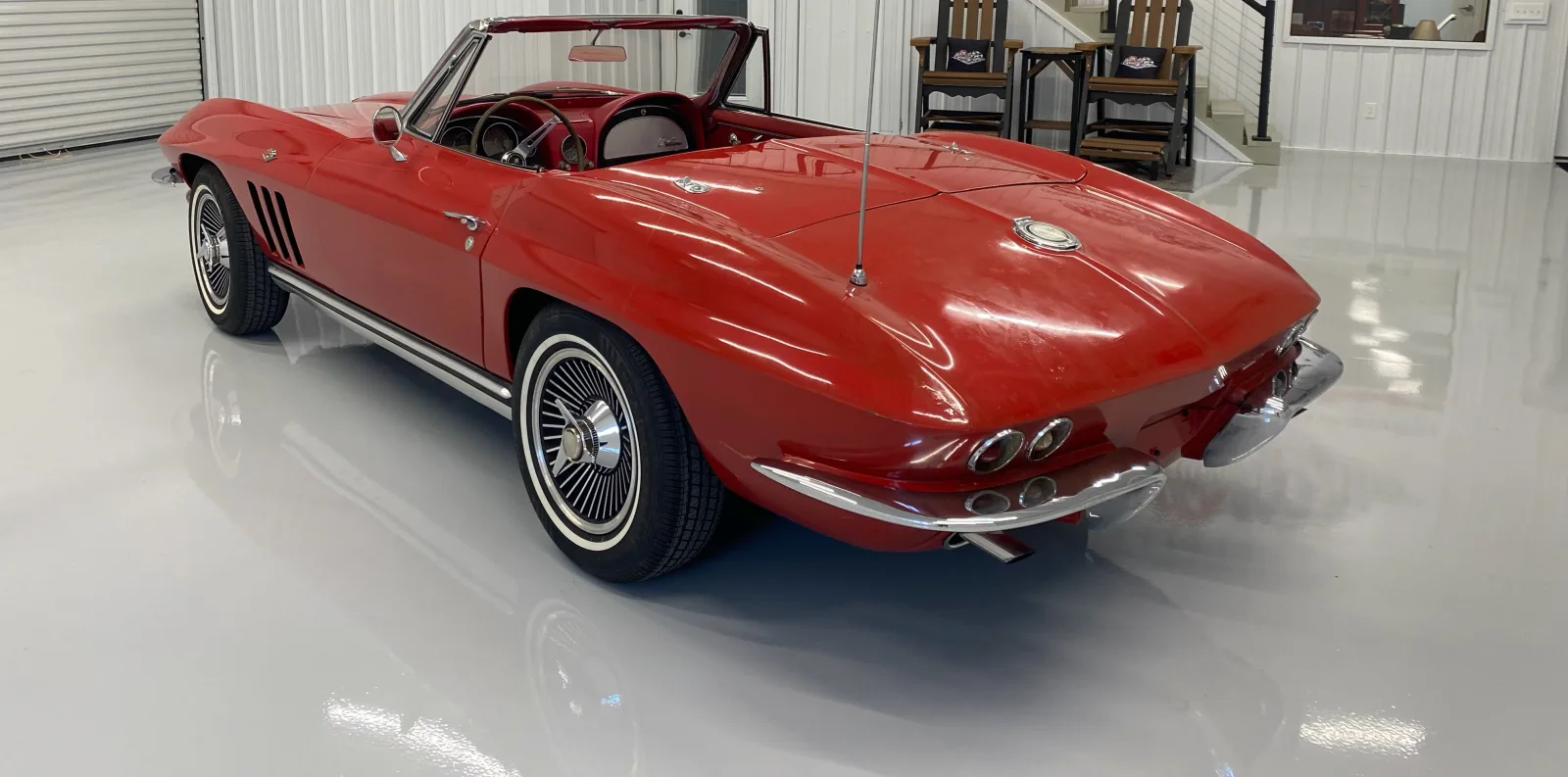
Commercial Epoxy Flooring
Floors specified for load, chemicals and cleaning schedules, installed around your operating hours.
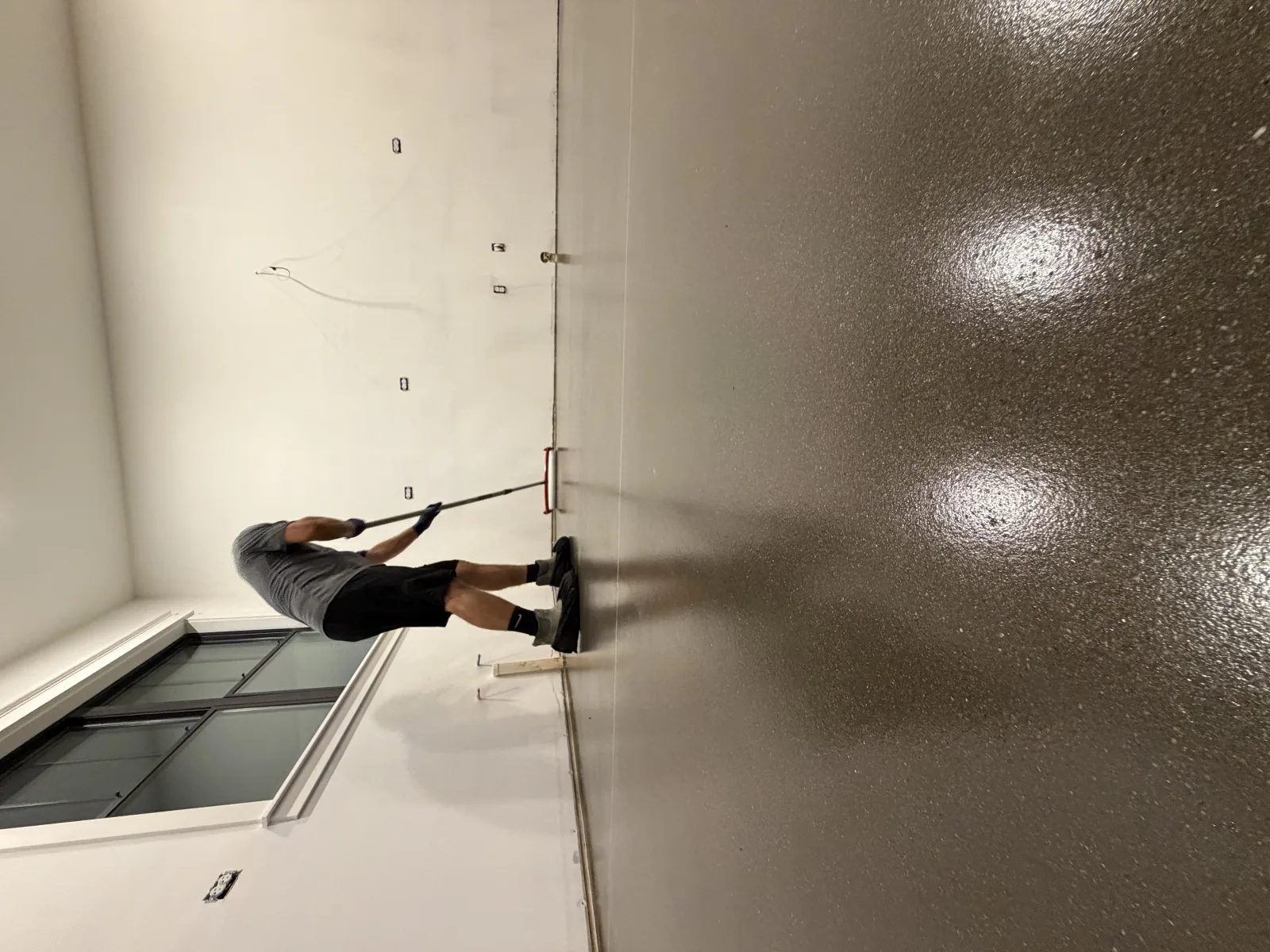
Commercial Flake Epoxy
The durability of a chip system with a finish that hides the traffic a business puts on a floor.
Commercial Metallic Floors
A showroom-grade decorative floor for spaces where customers form an opinion at the door.
Commercial Floor Painting
Straight, clean, single-color coatings for shops and warehouses where function beats decoration.
Commercial Concrete Floor Polishing
A hard, dust-free, low-maintenance floor made from the slab already in the building.
Prep
Grinding, sealing and surface preparation, including prep-only work for other installers.
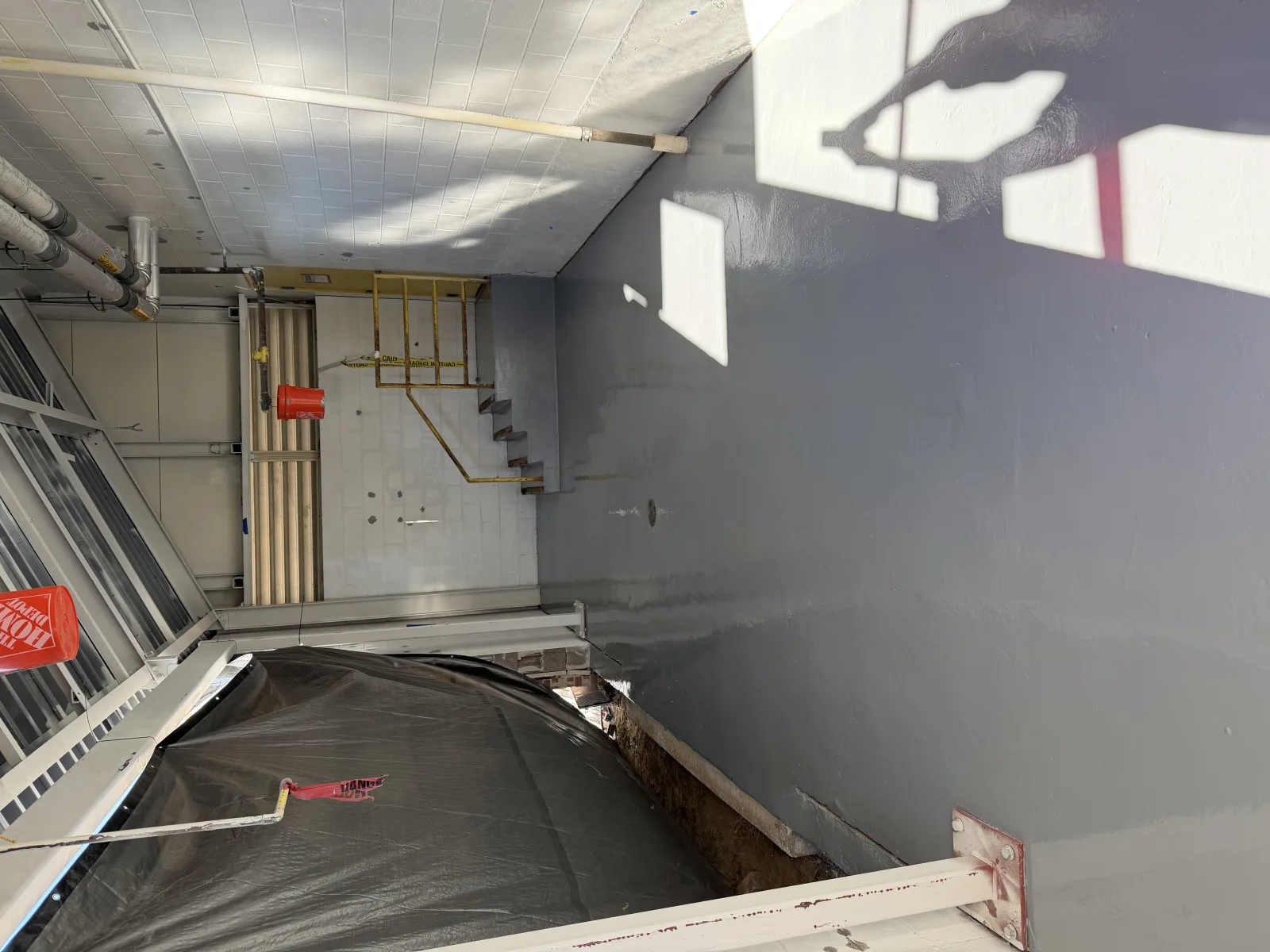
Concrete Grinding
Diamond grinding and surface preparation, sold on its own to builders and to other installers.
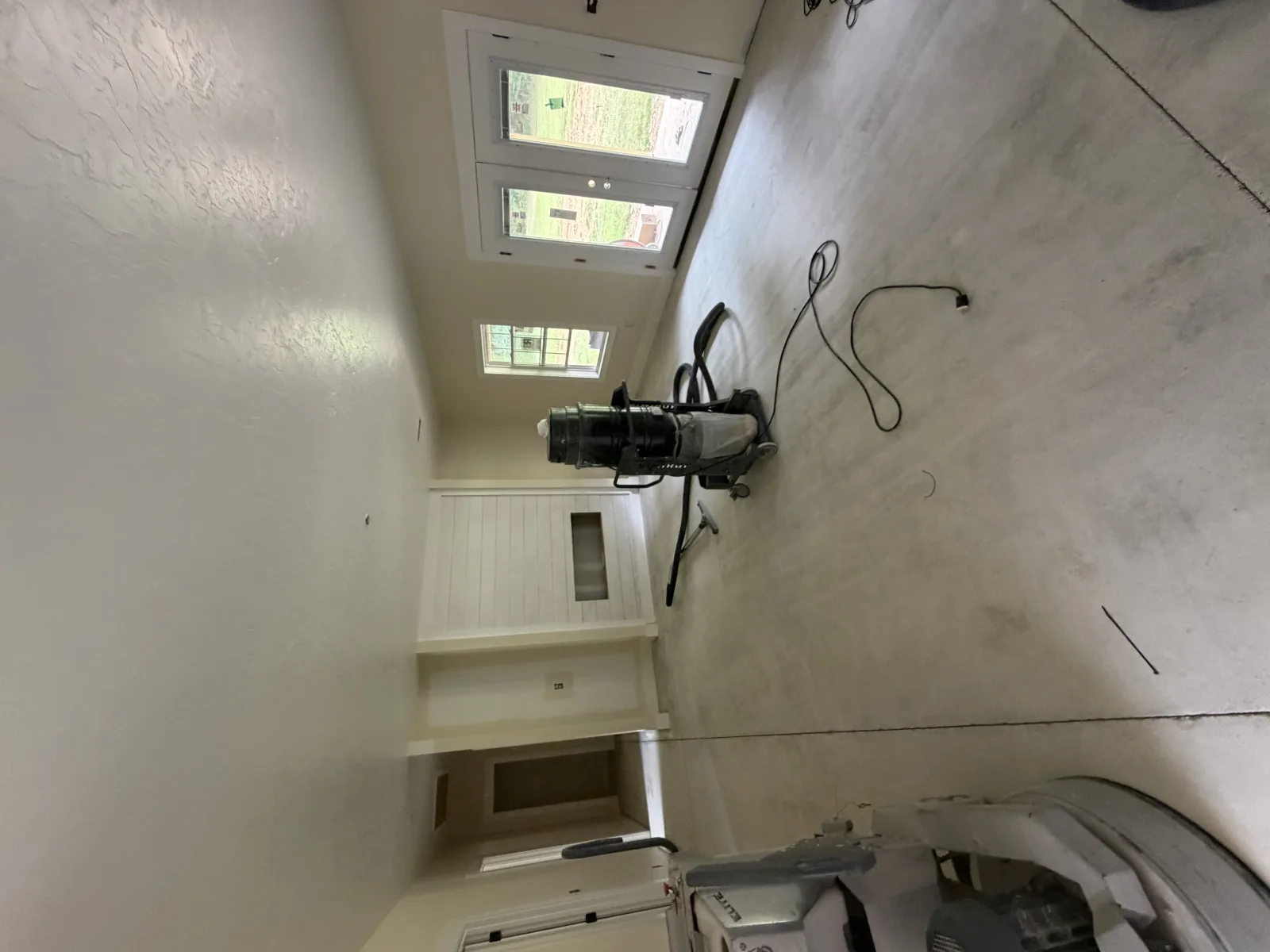
Concrete Sealing
Sealing concrete against water and stains, and the honest grind-and-seal finish for slabs with good character.
Concrete Floor Prep
Business-to-business surface preparation for coating installers and flooring contractors who need the substrate right.
Chemical-Resistant Novolac Epoxy
A denser epoxy chemistry for floors that see acids, solvents and aggressive cleaning.
Preparation is the product
The systems on this page differ in chemistry, thickness and finish, but they fail for the same reason when they fail: something was applied to concrete that was not ready for it. A trowelled slab has a closed surface that resin cannot grip, and a slab moving vapor will push a coating off regardless of what the tin cost.
Grind
Diamond tooling opens the surface to a measurable profile. No coating is ever rolled over a sealed slab.
Test
Below-grade and ground-level slabs get moisture-tested before quoting, not after a failure.
Repair
Cracks chased and filled, spalls rebuilt, joints treated so the coating has something sound to sit on.
The same person, every job
Taylor Shanks trained with Brian Phillips, The Epoxy Dude, in southern Indiana, and has run Shanks Concrete Coatings with his wife Heather since 2025. He quotes the floor, grinds it, and coats it himself. Licensed and insured, Alabama #2602341.
More about how Shanks works or see the sixty-mile working area.
Choosing a system
Which floor should I pick?
It depends on the room more than on taste. A garage that holds a vehicle usually wants flake; a finished basement you look at wants metallic or polished concrete; a wet room wants quartz. Taylor will tell you which one fits after he has seen the slab.
Do you do commercial as well as residential?
Both, and the preparation discipline is identical. What changes is build thickness, topcoat chemistry and how the work is scheduled around a business staying open.
Is there a system you would talk me out of?
Regularly. Novolac epoxy in a home garage is money spent on chemical resistance nobody needs, and a metallic floor in a working shop will get scarred. The cheaper right answer is the one you will hear.
Can two systems be combined?
Often, yes. A flake garage with a non-slip topcoat at the door landing is common, and a polished shop floor with a coated wash bay is a normal commercial layout.
How long does a typical floor take?
Three to four days for a standard two-car garage. Larger commercial floors are staged in sections so each area returns to service on a stated day.
Do you warranty the work?
Yes, and it is written down rather than promised on a doorstep. What it covers depends on the system, because a sealed patio and a novolac containment floor are not the same commitment.
Not sure which one you need?
Describe the room and what is wrong with the slab now. Taylor will tell you which system fits, including when it is the cheaper one.