
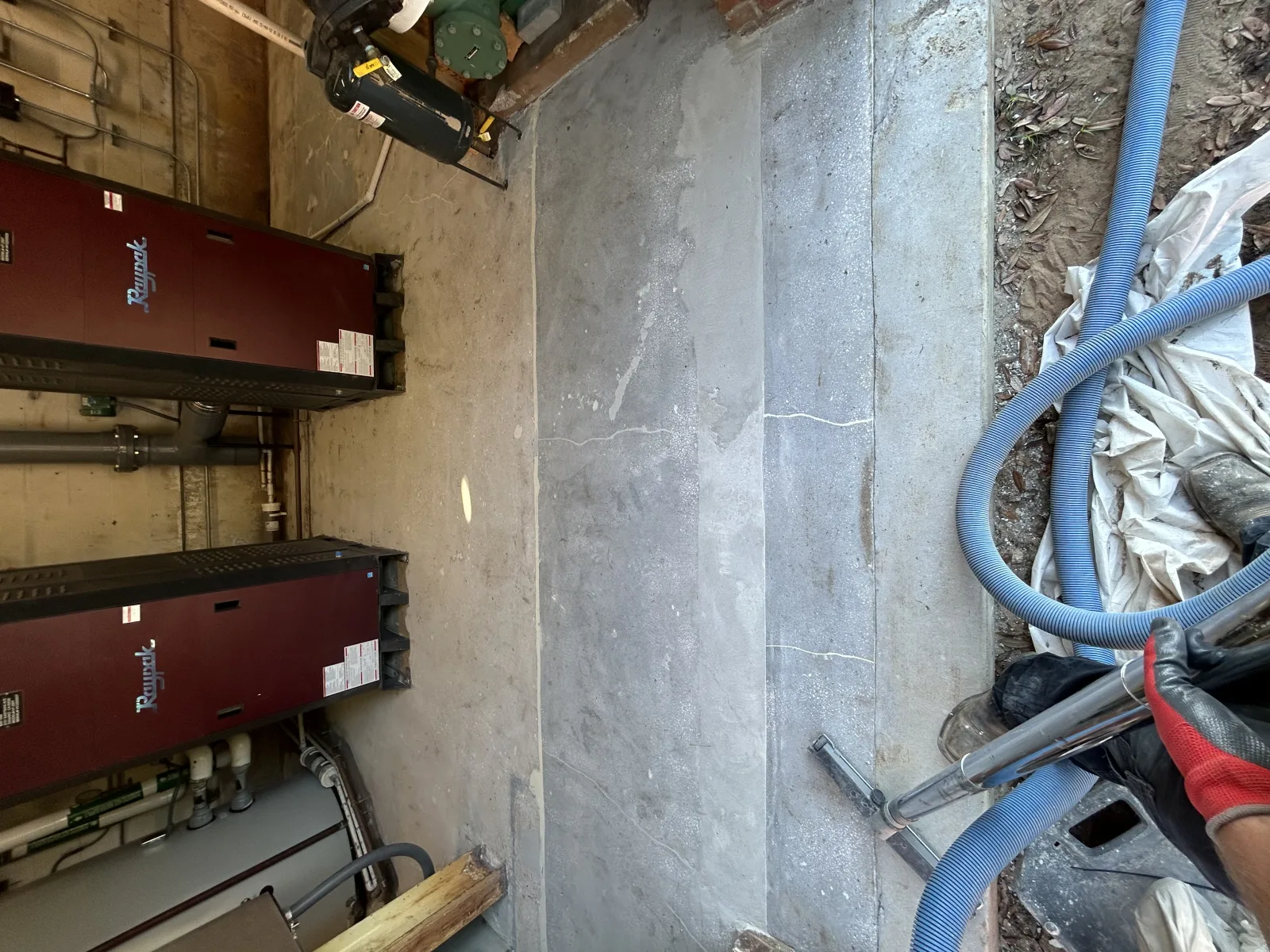
Commercial floor painting
Straight, clean, single-color coatings for shops and warehouses where function beats decoration.
The build-up, step by step
Every commercial floor painting job Shanks installs follows the same order, because skipping a stage is how floors fail. Taylor is on site for all of it.
Mechanical prep
Grinding or shot blasting. A rolled coating over an unprepared warehouse slab is the single most common failure.
Repair
Joints and cracks filled so traffic does not chip the edges out.
Color coat
A solids-heavy coating rather than a thin floor paint, applied to a measured film thickness.
Markings
Bay lines, walkways and hazard zones under the topcoat.
Right room, right system
Warehouses, mechanical rooms, storage areas, agricultural buildings and any space that wants bright, clean and simple.
Where it is the wrong call
Areas with heavy chemical exposure or constant standing water, which need a heavier build.
Back in service: Foot traffic next day, full traffic at three to five days.
Compare the other systems
Why this floor costs what it costs
A quote on this work is really a quote on preparation. Here is what Taylor is looking at when he walks a floor:
Size and shape
Bigger floors cost less per square foot, because the setup, the mixing and the cleanup are much the same whether the room is 400 or 1,400 square feet. Cut-up rooms with lots of edges take longer than open ones.
Which system you choose
Build thickness and the chemistry of the topcoat are the two biggest material costs. A heavier commercial build genuinely costs more than a residential one.
Access
A walk-out basement with a door at grade is straightforward. Carrying equipment down a flight of stairs, or working around a building that has to stay open, adds time.
Condition of the slab
A clean, sound slab grinds in a morning. One carrying old paint, carpet glue, or a failed coating can take a full day longer before anything can be applied.
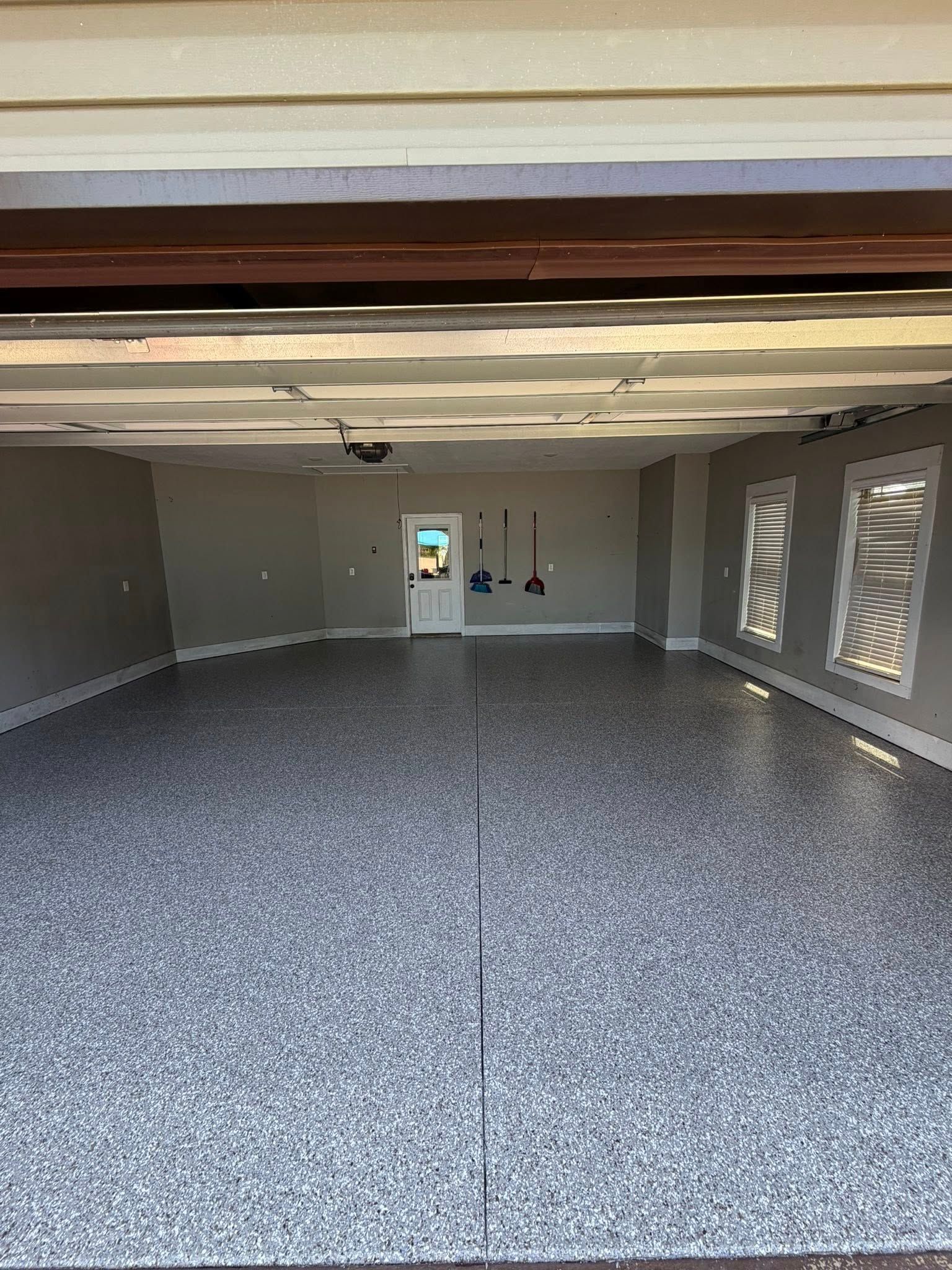
What Alabama slabs do
Out toward Gadsden, Southside and Pell City there are a lot of walk-out basements cut into a hillside. Those slabs sit against earth on three sides, so they get moisture-tested before a quote rather than after a failure.
Freeze-thaw cycling here is mild compared with the north, but it is real, and it is what turns a hairline crack in a porch or a garage apron into a spalled edge over a few winters. Cracks get filled before they are coated, not after.
Where the trailer goesWhat the days actually look like
People are usually more anxious about the disruption than the floor. Here is what the days actually look like:
Planning the shutdown
The sequence is built around your operating hours first. Most commercial floors here are done in sections or overnight so the business keeps running.
Clearing and protection
Racking, stock and equipment move out of the working section, and adjacent areas are sheeted so dust and overspray stay put.
Prep and application
Grinding or shot blasting, repair, then the build. Each section gets handed back on a stated day, not a vague one.
Return to service
Foot traffic in about 24 hours, racking and vehicles at the full cure window for the system chosen.
Keeping it looking new
Sweep and scrub with a neutral cleaner; a solid color shows dirt sooner than a chip floor, which is the trade-off for how bright it makes the room. Traffic lanes will show first, and a recoat in those lanes is a straightforward job that does not need the whole floor redone.
Anything Taylor installs comes with a walk-through at handover covering exactly this, plus what to avoid in the first two weeks while the coating reaches full hardness. If something does go wrong later, tell him about it rather than living with it.
The owner is the installer
Shanks Concrete Coatings is Taylor and Heather Shanks, working out of Anniston. Taylor trained directly with Brian Phillips, The Epoxy Dude, in southern Indiana, and he runs the grinder and pulls the squeegee on every job himself. Licensed and insured, Alabama #2602341.
If a commercial floor painting floor is not the right answer for your room, he will tell you that on the first visit rather than sell it to you. More about how Shanks works, or send over the details of your floor.
Commercial Floor Painting questions
Why is this different from floor paint from a store?
Film thickness and chemistry. A store paint is a thin single-part coating; this is a measured, solids-heavy build over a mechanically prepared slab.
Does a light color really help?
Considerably. A white or light gray floor lifts the light level in a warehouse noticeably and makes leaks and dropped hardware easy to spot.
Can it be washed with a scrubber?
Yes, that is part of the point. The topcoat is chosen for the cleaning method you actually use.
How long will it last?
In a well-prepped warehouse, many years, with a recoat when the traffic lanes start to show.
Can you coat while we keep working?
Usually yes, section by section. Grinding is dust-controlled and the coatings used are low odour, so adjacent areas keep operating while one bay is closed off.
Four questions worth asking any installer
Ask these of Shanks and of whoever else you are talking to. The answers separate a floor that lasts from one that looks good for a season, and a straight installer will not mind being asked.
How are you preparing the slab?
The only acceptable answers involve a diamond grinder or a shot blaster. Acid etching and a scrub with degreaser is not preparation, and it is the single most common reason a coating lets go.
Are you testing for moisture?
On any basement or ground-level slab this should be a yes with a number attached. Vapor pressure will push a coating off no matter how good the product is.
Who is actually on my floor?
Worth asking whoever quotes you. With Shanks the person who quotes it is the person who grinds it and coats it, and that is not true everywhere.
What is the topcoat?
A UV-stable polyaspartic or aliphatic urethane holds its color. A cheap job leaves a standard epoxy as the top layer, and it will amber in daylight within a year or two.
Other systems for the same room
Commercial Floor Painting is one of twenty-two systems Shanks installs. If the room is telling you something different, these are the closest alternatives, and Taylor will happily point you at the cheaper one if it is the right answer.

Commercial Epoxy
Another system Shanks installs across the same sixty-mile area.
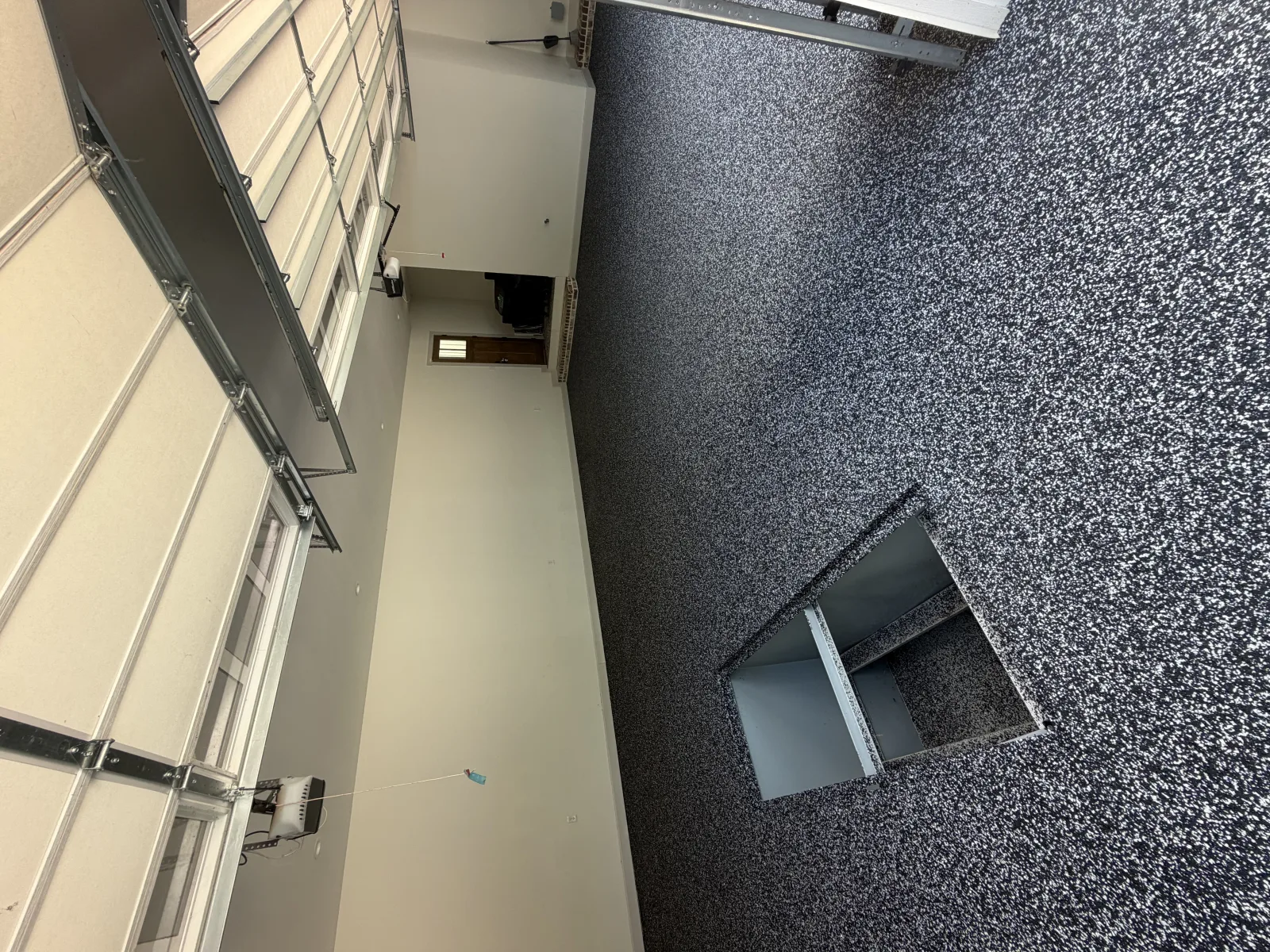
Commercial Flake
Another system Shanks installs across the same sixty-mile area.
Commercial Polishing
Another system Shanks installs across the same sixty-mile area.
Novolac Epoxy
Another system Shanks installs across the same sixty-mile area.
Tell Taylor about your floor
Square footage, what the room is used for, and what the slab looks like now. That is enough to get you a real number on commercial floor painting.