
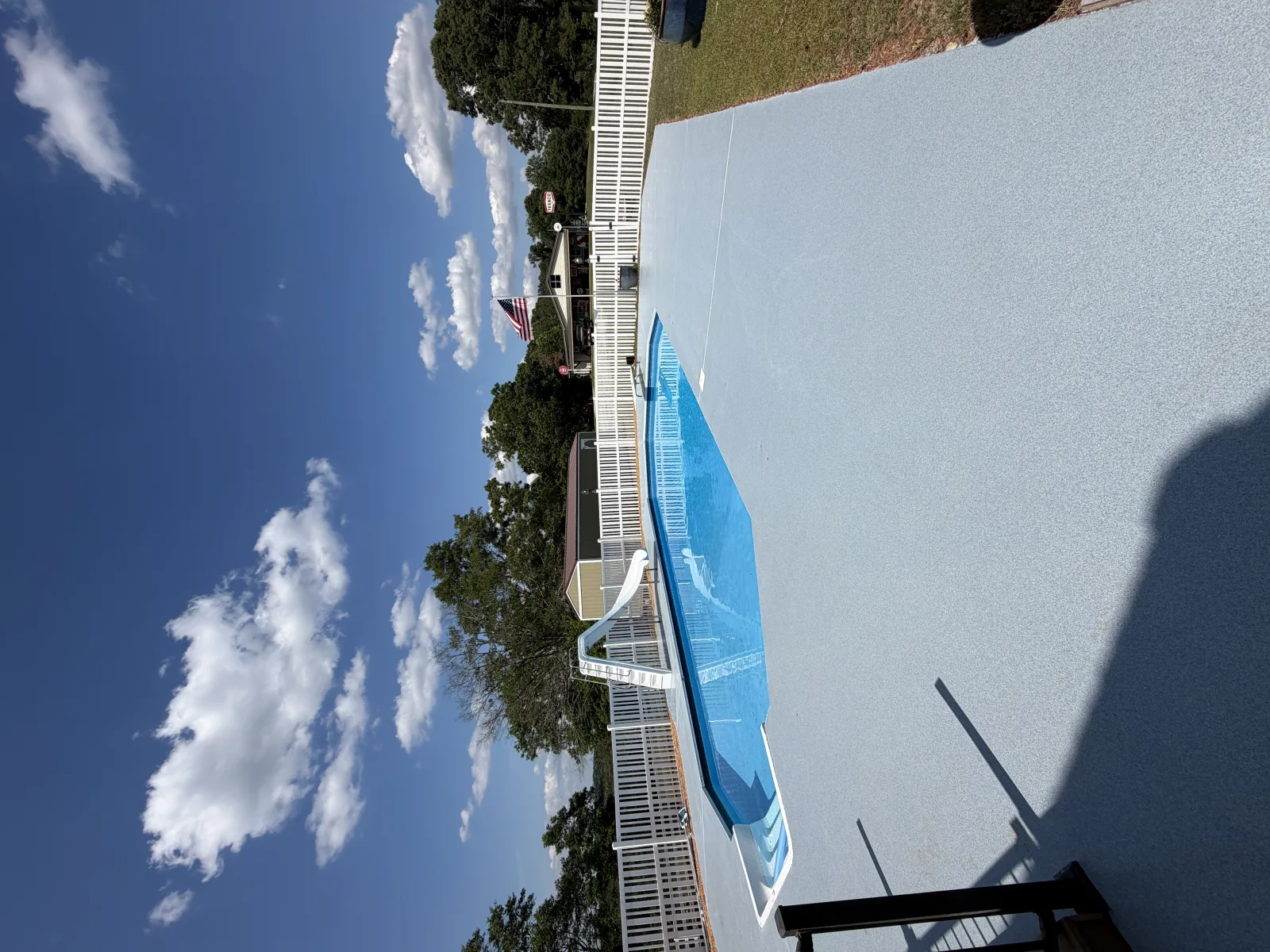
Non-slip epoxy floors
Traction engineered into the topcoat for pool bathrooms, ramps, wash bays and entryways.
The build-up, step by step
Every non-slip epoxy floor job Shanks installs follows the same order, because skipping a stage is how floors fail. Taylor is on site for all of it.
Choose the aggregate
Fine silica for a barely-there grip underfoot, graded quartz where the floor is wet daily, and aluminum oxide where boots and water meet.
Broadcast or blend
Aggregate is either broadcast into the wet topcoat for maximum bite, or suspended in it for a softer texture.
Seal
A final clear locks the aggregate so it cannot be swept or mopped out.
Right room, right system
Pool surrounds, basement stairs and landings, commercial kitchens, wash bays and any ramp.
Where it is the wrong call
Rooms that get mopped by hand daily and want to stay easy to clean. More grip always means more effort with a mop.
Back in service: Foot traffic next day, full service at five to seven days.
Compare the other systems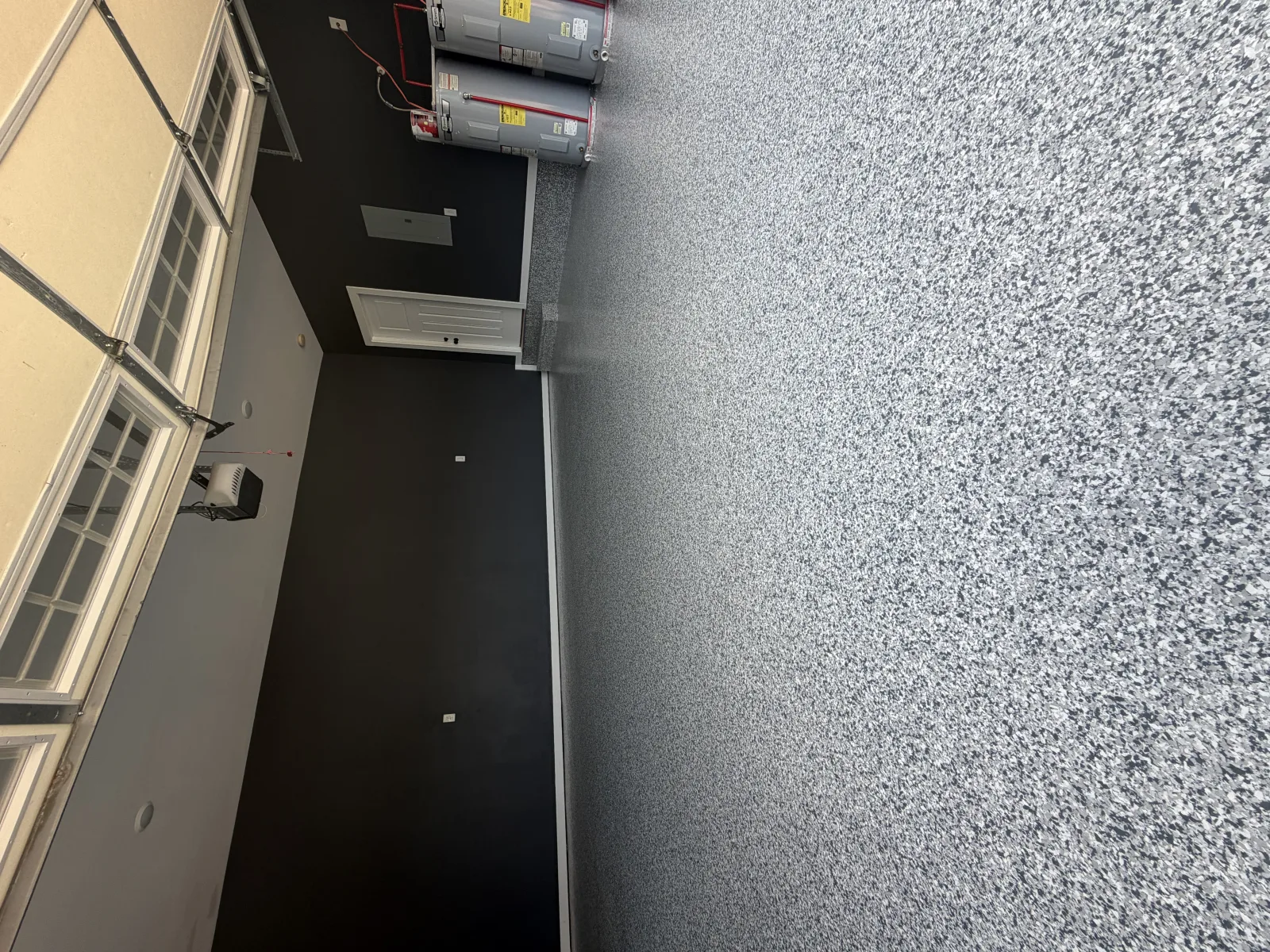
Why this floor costs what it costs
Two floors the same size can land a long way apart on price. These are the variables that decide it:
Condition of the slab
A clean, sound slab grinds in a morning. One carrying old paint, carpet glue, or a failed coating can take a full day longer before anything can be applied.
How much repair it needs
Cracks, spalled edges, pitting and old anchor holes are filled and ground flush before coating. A slab that needs a lot of this can add a day on its own.
Size and shape
Bigger floors cost less per square foot, because the setup, the mixing and the cleanup are much the same whether the room is 400 or 1,400 square feet. Cut-up rooms with lots of edges take longer than open ones.
Which system you choose
Build thickness and the chemistry of the topcoat are the two biggest material costs. A heavier commercial build genuinely costs more than a residential one.
What Alabama slabs do
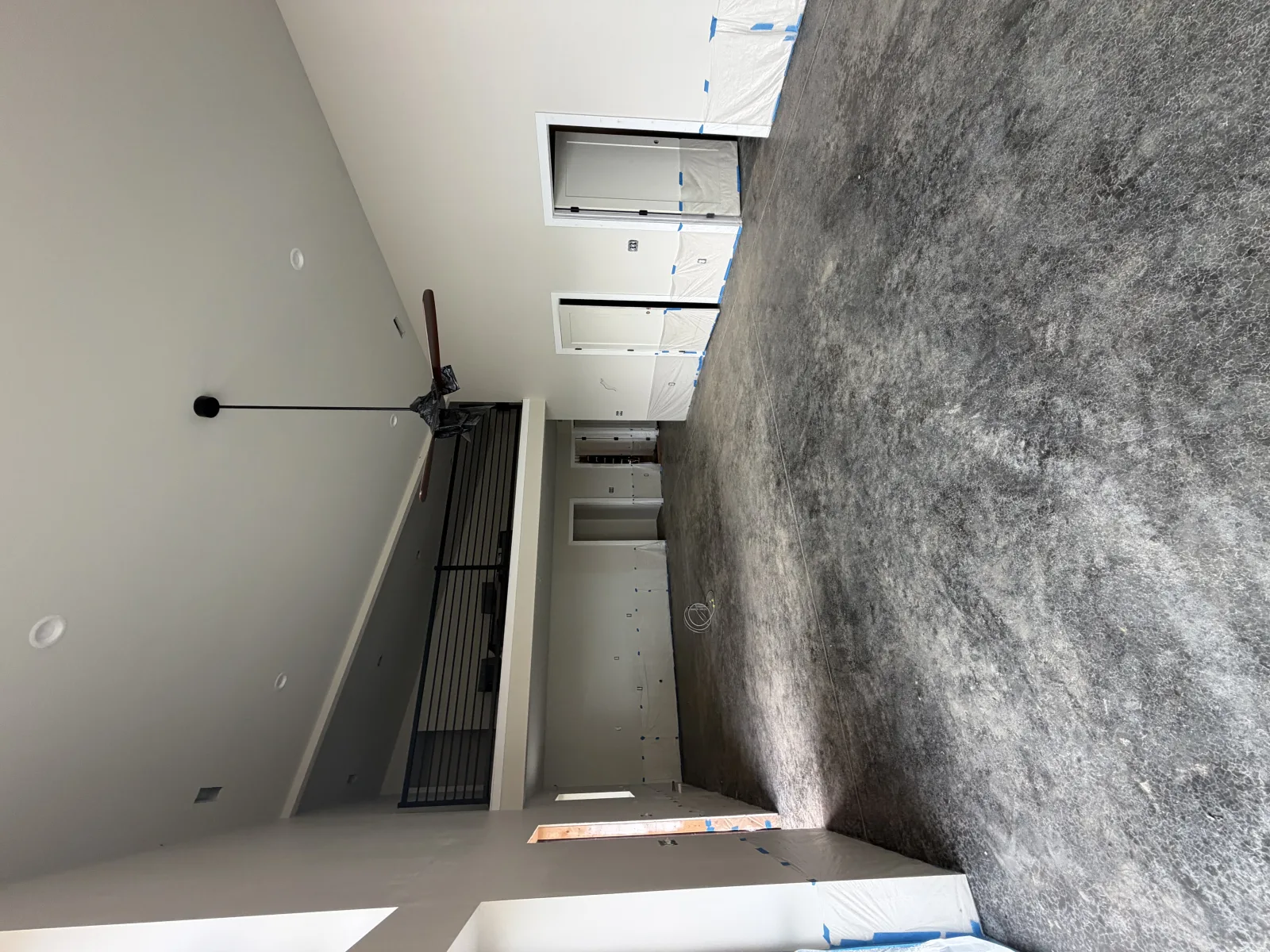
Most of the housing around Anniston, Oxford and Jacksonville was poured between the sixties and the eighties, and those slabs were hard-trowelled to a tight, closed surface. They look clean and they take a coating badly until they are properly ground, which is why a store-bought kit so often lets go here within a year.
Out toward Gadsden, Southside and Pell City there are a lot of walk-out basements cut into a hillside. Those slabs sit against earth on three sides, so they get moisture-tested before a quote rather than after a failure.
Where the trailer goesWhat the days actually look like
People are usually more anxious about the disruption than the floor. Here is what the days actually look like:
Before Taylor arrives
The room has to be completely empty, including anything mounted low on the walls if the coating is being coved up. Freezers and fridges need somewhere else to live for a few days, and the breaker for the room should be reachable.
Grinding day
The loudest day. Grinders run on HEPA vacuums so dust stays contained, but it is not quiet, and it is worth knowing that in advance if somebody works from home.
Coating days
Once resin is down, the room is closed. Pets and children need to stay out, and doors get taped so nobody wanders in overnight.
Getting it back
Foot traffic the next morning. Vehicles wait the full window, and putting a car back early is the one shortcut that visibly damages a new floor.
Keeping it looking new
A stiff brush and a neutral cleaner, because a flat mop skates over the texture and leaves the low spots dirty. In a washdown room it is hosed and squeegeed to the drain. The texture is what makes it safe, so cleaning it properly matters more than on a smooth floor.
Anything Taylor installs comes with a walk-through at handover covering exactly this, plus what to avoid in the first two weeks while the coating reaches full hardness. If something does go wrong later, tell him about it rather than living with it.
The owner is the installer
Shanks Concrete Coatings is Taylor and Heather Shanks, working out of Anniston. Taylor trained directly with Brian Phillips, The Epoxy Dude, in southern Indiana, and he runs the grinder and pulls the squeegee on every job himself. Licensed and insured, Alabama #2602341.
If a non-slip epoxy floor floor is not the right answer for your room, he will tell you that on the first visit rather than sell it to you. More about how Shanks works, or send over the details of your floor.
Non-Slip Epoxy Floor questions
Will it shred bare feet?
Not if the aggregate is matched to the room. A pool deck uses a rounded, fine texture; a wash bay uses something far more aggressive.
Can grip be added to a floor I already have?
Often yes. If the existing coating is sound it can be scuffed and given a new textured topcoat without redoing the whole system.
Does it meet a slip rating?
Aggregate systems can be specified to a coefficient of friction for commercial work. Bring the spec and it gets built to it.
How do I clean it?
Stiff brush and a neutral cleaner. A flat mop will skate over the texture and leave the low spots.
Can grip be added later if I want more?
Yes. Adding texture to an existing sound coating is a topcoat job rather than a rebuild, so it is one of the cheaper changes to make after the fact if the floor turns out slicker than you expected.
Four questions worth asking any installer
Ask these of Shanks and of whoever else you are talking to. The answers separate a floor that lasts from one that looks good for a season, and a straight installer will not mind being asked.
How are you preparing the slab?
The only acceptable answers involve a diamond grinder or a shot blaster. Acid etching and a scrub with degreaser is not preparation, and it is the single most common reason a coating lets go.
Are you testing for moisture?
On any basement or ground-level slab this should be a yes with a number attached. Vapor pressure will push a coating off no matter how good the product is.
Who is actually on my floor?
Worth asking whoever quotes you. With Shanks the person who quotes it is the person who grinds it and coats it, and that is not true everywhere.
What is the topcoat?
A UV-stable polyaspartic or aliphatic urethane holds its color. A cheap job leaves a standard epoxy as the top layer, and it will amber in daylight within a year or two.
Other systems for the same room
Non-Slip Epoxy Floor is one of twenty-two systems Shanks installs. If the room is telling you something different, these are the closest alternatives, and Taylor will happily point you at the cheaper one if it is the right answer.

Flake Epoxy
Another system Shanks installs across the same sixty-mile area.
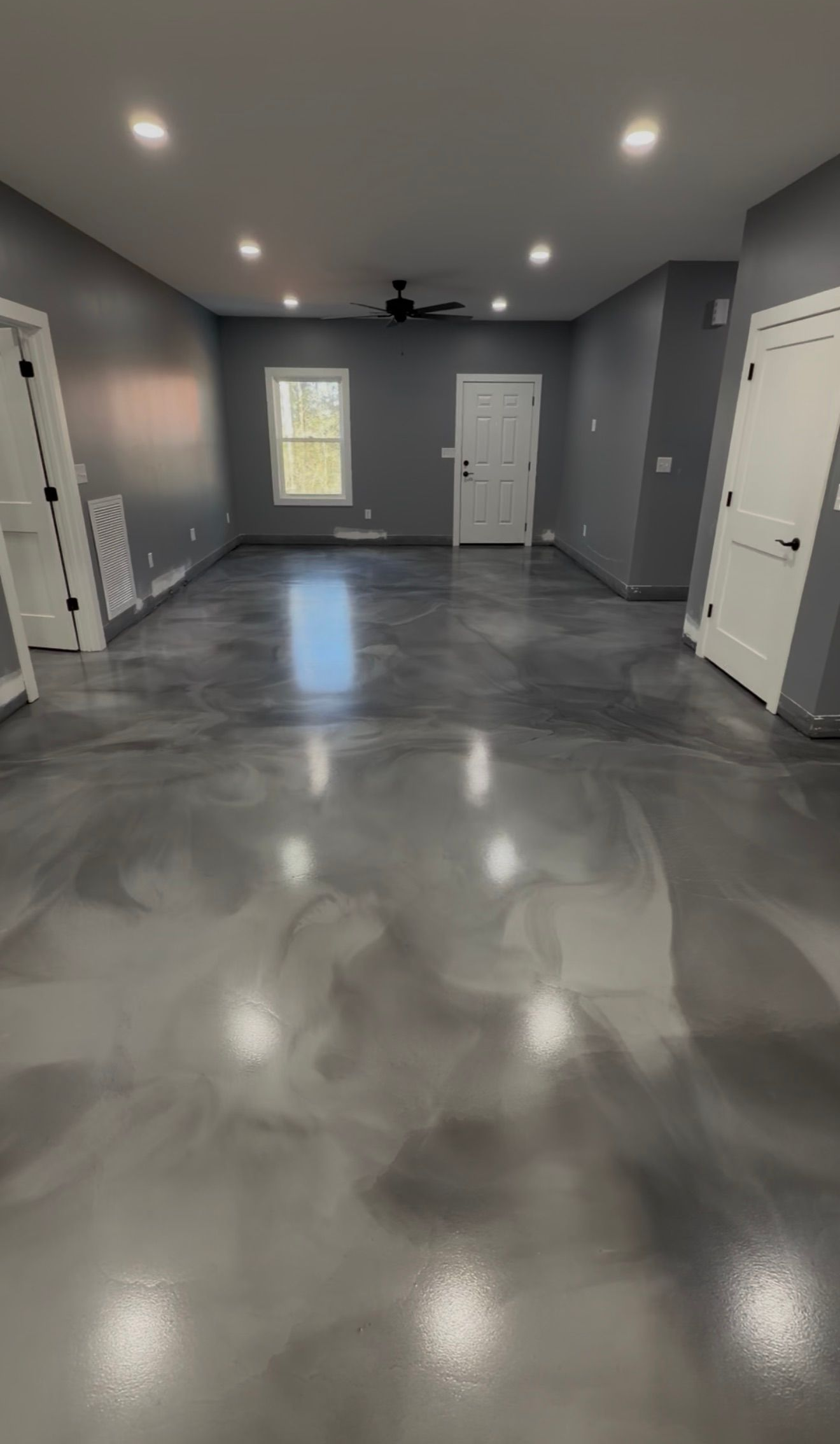
Metallic Epoxy
Another system Shanks installs across the same sixty-mile area.
Garage Floor Epoxy
Another system Shanks installs across the same sixty-mile area.
Grind and Seal
Another system Shanks installs across the same sixty-mile area.
Tell Taylor about your floor
Square footage, what the room is used for, and what the slab looks like now. That is enough to get you a real number on non-slip epoxy floor.